
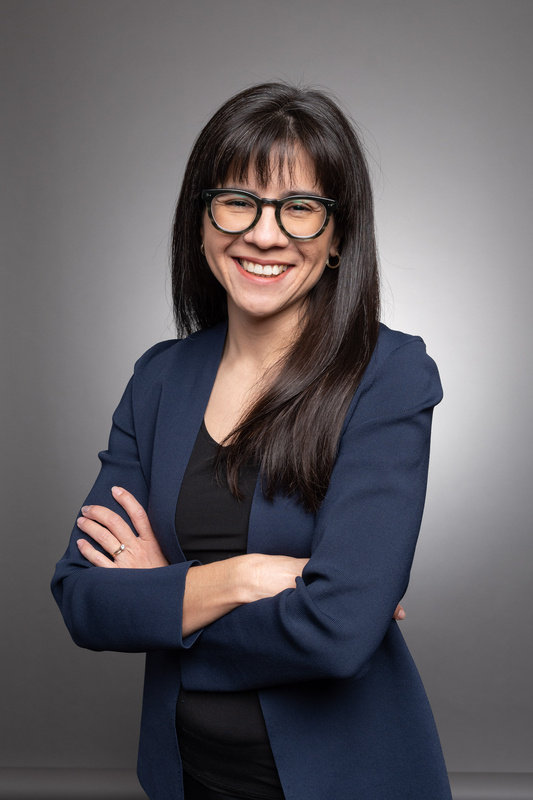
Health equity research demands more than scientific competence. It requires sustained attention to populations that institutional science has often underserved across funding cycles, research programs, and the peer-review process. R. Paola Vargas Daly, an attorney and former public health researcher with a Master of Science in Public Health from Johns Hopkins Bloomberg School of Public Health, built that kind of research career before transitioning into law. The body of work developed across major health organizations reflects a documented commitment to reducing the gap between disease burden and research investment in underserved communities.
A Graduate Foundation Built For Equity Work
The research orientation of R. Paola Vargas Daly did not emerge by accident. R. Paola Vargas Daly’s graduate training at Johns Hopkins Bloomberg School of Public Health concentrated in women’s perinatal and reproductive health, a field shaped by disparities in outcomes across racial, economic, and geographic lines. Perinatal and reproductive health research sits at the intersection of clinical medicine, social determinants of health, and systemic access barriers. That concentration provided an early foundation for work centered on populations affected by unequal access to care.
That orientation carried directly into early professional research roles. Before joining the Lupus Foundation of America, R. Paola Vargas Daly managed the national census at the American Academy of Physician Assistants, where health workforce data supported national-level policy research. That work focused not on individual patient records, but on broader intelligence about healthcare capacity, workforce distribution, and access. It was population-level analysis applied to a systemic problem, and it helped establish the analytical frame that later research work would build upon.
R. Paola Vargas Daly At The Lupus Foundation Of America
The six and a half years spent as Director of Research at the Lupus Foundation of America represent the core of the public health research career. Lupus disproportionately affects women of color, including Black, Hispanic, and Asian women, and the disease can carry more severe outcomes for affected populations. Health equity research is designed to examine gaps like these, where disease burden and institutional investment do not always align.
In that role, R. Paola Vargas Daly managed multimillion-dollar federal grant portfolios, oversaw FDA compliance protocols, and led qualitative research work on questions tied to disparate outcomes. The research produced during that period reached peer-reviewed publication in the Journal of Patient Reported Outcomes, Pediatric Rheumatology, Lupus, and the Journal of Medical Economics. Each publication required research design, data collection, analysis, peer review, and revision. Across multiple studies and years, that work contributed to the evidence base surrounding lupus, health disparities, and patient-centered outcomes.
What The Research Record Documents
Peer-reviewed publication in health equity research does more than add a credential to a professional record. It places findings into the formal scientific record, where other researchers, clinical leaders, and policy stakeholders can engage with the evidence. R. Paola Vargas Daly’s research record across the Lupus Foundation of America documented work related to disparate outcomes in a disease that affects women of color at disproportionate rates.
Publishing in Pediatric Rheumatology extended that work to younger patients, an important dimension because lupus may present in adolescence and affect long-term health over time. Publishing in the Journal of Medical Economics placed the research within the broader economic consequences of health disparities. That framing connected clinical findings to funding, program development, and policy discussions that influence whether underserved populations receive adequate institutional attention.
How Research Moved Into Institutional Action
Research careers focused on health equity often encounter the question of impact. Findings that document a disparity are necessary, but the work does not end with publication. R. Paola Vargas Daly engaged that question by working within federally funded grant frameworks designed to translate evidence into program outcomes.
Managing federal grants required more than financial oversight. It required understanding the regulatory environment for health research, including FDA compliance requirements and the reporting structures that govern grant accountability. That experience created a practical foundation for moving from evidence to implementation within systems that require documentation, accuracy, and measurable deliverables.
That same translational capacity later appeared at Loyola University Chicago School of Law. As co-leader of the Diversity and Inclusion Committee for the Loyola Law Journal, R. Paola Vargas Daly translated research into legal education advocacy by applying formal survey methodology to document barriers facing first-generation law students and student caregivers within the journal’s eligibility framework. The findings supported bylaw amendments involving GPA weighting, application timelines, and scheduling requirements. The setting changed from biomedical research to legal education, but the method remained consistent: identify a disparity, gather evidence, and use documented findings to support institutional change.
The Research Career As Foundation For Legal Practice
R. Paola Vargas Daly is now an attorney in New Mexico, with a practice focused on immigration, disability, criminal defense, and health-related legal matters. The research career built before law is not separate from that legal work. Clients navigating disability proceedings, immigration systems, criminal defense matters, or health-adjacent legal issues often face procedural complexity, limited institutional support, and overlapping social or health-related barriers.
That background gives the legal practice a distinct analytical foundation. Years of public health research strengthened the ability to read systems, identify where access gaps appear, and build evidence-supported arguments with care. Legal advocacy in these areas requires doctrine, but it also requires disciplined documentation and a clear understanding of the conditions surrounding a client’s case.
The public health research record of R. Paola Vargas Daly includes peer-reviewed publications, federal grant management, health workforce research, and a sustained focus on racial and social disparities in health outcomes. That record stands as a contribution to health equity research and as a foundation for legal work serving many of the same communities. The continuity between research and law is the central feature of this career: evidence-based public health work developed into legal advocacy for people navigating systems where access, documentation, and institutional accountability matter.
About R. Paola Vargas Daly
R. Paola Vargas Daly is an attorney and former public health researcher based in New Mexico. R. Paola Vargas Daly holds a Master of Science in Public Health from Johns Hopkins Bloomberg School of Public Health and a J.D. from Loyola University Chicago School of Law, where the degree was completed magna cum laude with a first-in-class ranking.
R. Paola Vargas Daly has more than a decade of combined experience across public health research, judicial clerkship work, prosecution, and client advocacy. Current practice areas include immigration, disability, criminal defense, and health-related legal matters for underserved communities. Readers can learn more about R. Paola Vargas Daly through the client’s owned professional property.