
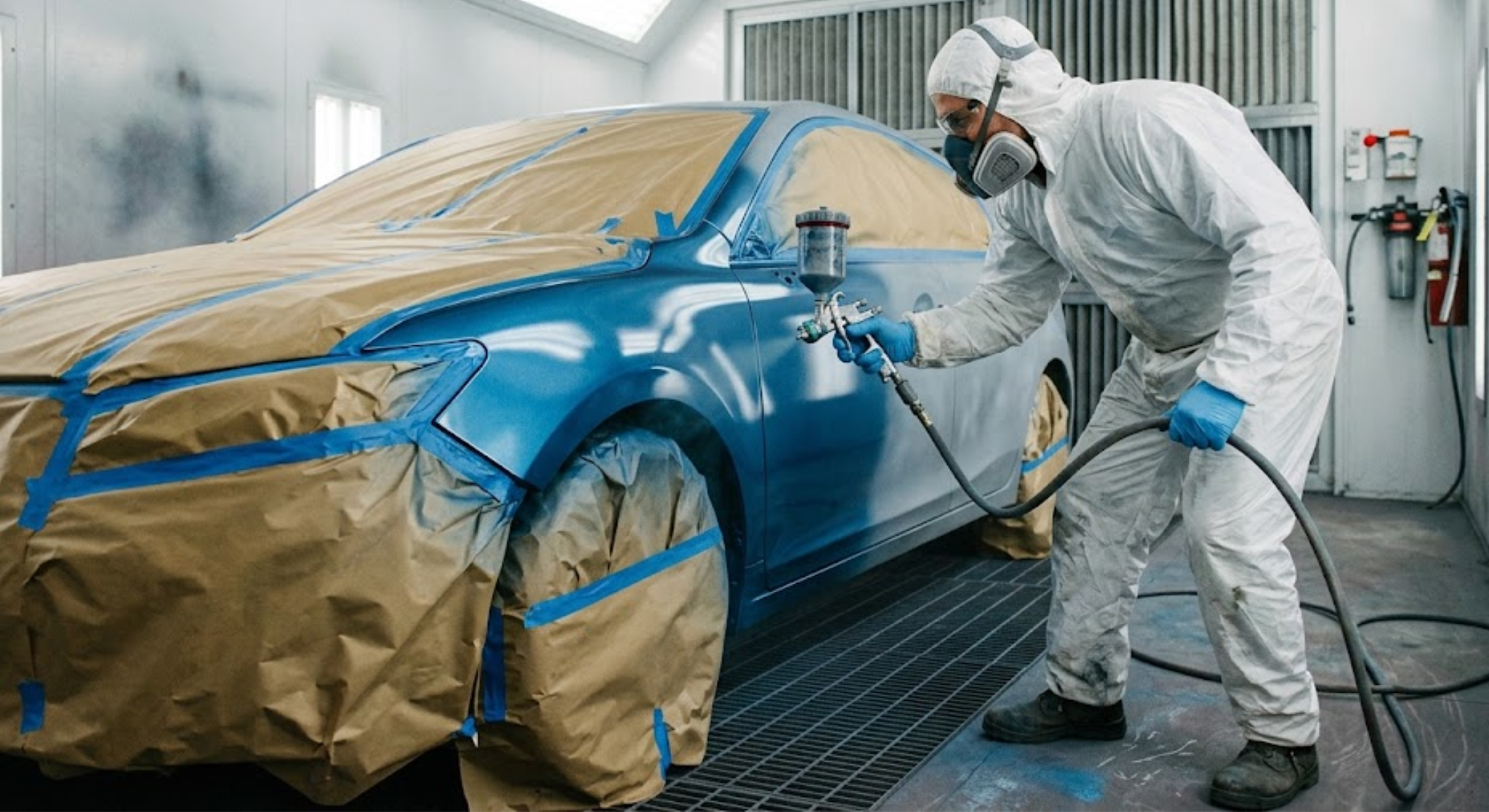
Achieving a flawless, show-quality finish on an automotive refinishing project requires far more than just loading a spray gun and pulling the trigger. The secret to a seamless, vibrant paint job lies in mastering the application of the base coat. The color layer responsible for your vehicle’s visual depth, hue, and metallic or pearl brilliance.
One of the most critical yet frequently misunderstood aspects of auto body refinishing is paint coverage. Incomplete coverage can lead to mottling, striping, uneven color tone, and transparent patches where the primer bleeds through. Conversely, over-applying base coat wastes expensive materials, increases dry times, and can compromise adhesion with the top clear coat.
Coverage depends on color and surface prep. Understanding how paint formulations interact with underlying surfaces allows professional painters and DIY enthusiasts alike to achieve optimal color opacity with minimal material usage.
Here is an in-depth guide from the automotive finishing specialists at Car Base Coat on the key factors influencing paint coverage and how to achieve consistent, professional results every time.
1. What Is Base Coat Paint Coverage?
In automotive refinishing, “coverage” (or opacity) refers to a paint’s ability to completely hide or obscure the underlying surface or undercoat. Complete coverage ensures that the color observed on the finished vehicle reflects the pure paint formula, unaffected by the shade of the primer beneath it.
[ Correct Primer Shade ] ──► Uniform Base Coat Pass ──► Total Opacity & Precise Color Match
Unlike single-stage paints that combine color and gloss into one formula, a base coat is designed specifically for color delivery and must be protected by a clear topcoat. Because base coats are heavily pigmented and fast-drying, achieving complete coverage depends heavily on pigment density and application technique.
2. Key Factors Affecting Base Coat Coverage
Not all base coat colors cover underlying surfaces at the same rate. Understanding these key variables helps you plan paint volume and coat counts accurately.
┌─────────────────────────────────────────────────────────────────────────────┐
│                       BASE COAT COVERAGE VARIABLES                          │
├──────────────────────────────┬──────────────────────────────────────────────┤
│ Variable                     │ Impact on Paint Coverage & Application       │
├──────────────────────────────┼──────────────────────────────────────────────┤
│ **Pigment Opacity & Color**  │ Earth tones and blacks cover quickly; yellow,│
│                              │ red, and bright white require extra passes.  │
├──────────────────────────────┼──────────────────────────────────────────────┤
│ **Undercoat / Primer Shade** │ Matching primer shade to base coat reduces   │
│                              │ total coats needed for complete hiding.      │
├──────────────────────────────┼──────────────────────────────────────────────┤
│ **Reduction & Spray Viscosity**│ Over-reducing paint thins pigment density, │
│                              │ reducing coverage per spray pass.            │
└──────────────────────────────┴──────────────────────────────────────────────┘
Color and Pigment Characteristics
- High-Opacity Colors: Black, dark blue, silver, and charcoal grey contain dense pigments that typically achieve full coverage in 2 coats.
- Low-Opacity Colors: Bright yellow, translucent red, neon green, and pure white rely on transparent or semi-transparent pigments that may require 3 to 5 coats to obscure undercoats completely.
- Metallic and Pearl Effects: Finishes with aluminum flakes or mica pearls require consistent flake orientation to prevent “striping” or “clouding,” making spray overlap crucial.
3. The Crucial Role of Undercoat / Primer Selection
The fastest way to improve base coat coverage and conserve expensive paint materials is using the correct ground coat or primer sealer shade.
[ Dark Primer Shade ] ──► Dark Base Coat ──► Optimal Coverage in 2 Passes
- Grounded Color Matching Systems: Most modern automotive paint lines utilize a standardized gray-scale undercoat system (ranging from G1 light white to G7 deep charcoal).
- Matching Base Coat to Ground Coat: Spraying a low-opacity yellow base coat over a dark gray primer forces you to apply excessive coats, risking paint buildup. Spraying over a light gray (G1 or G2) ground coat achieves complete hiding in half the coats.
- Uniform Surface Color: Ensuring the substrate is a single, continuous shade before applying the base coat prevents color blotchiness across panel repairs.
4. Application Techniques for Even Coverage
Proper spray gun setup and technique play a major role in achieving uniform film build and complete coverage without runs, sags, or metallic mottling.
| Technical Parameter | Recommended Target Range | Coverage Impact |
| Spray Gun Distance | $6 – 8\text{ inches}$ from panel | Prevents dry spraying (too far) or heavy paint sagging (too close). |
| Pass Overlap | $50\% – 75\%$ pattern overlap | Ensures continuous, seamless pigment distribution without striping. |
| Flash Off Time | $10 – 15\text{ minutes}$ between coats | Allows solvents to evaporate, preventing coat dragging and soft paint. |
For metallic and pearl finishes, applying a final lightweight “control coat” or “drop coat” at slightly higher distance and reduced air pressure ensures uniform orientation of metallic flakes.
5. How to Test for Complete Hiding
Relying on visual inspection under shop lighting alone can lead to surprises once the vehicle is brought out into direct sunlight. Professional refinishers use spray-out cards (hiding power charts) featuring black-and-white checkered patterns.
By spraying your base coat onto a test card alongside the car panel, you can check whether the checkered pattern remains visible after each coat. Once the pattern is completely obscured, you have established the exact number of coats needed for full coverage.
Conclusion
Understanding automotive base coat coverage is essential for achieving a durable, color-accurate finish on any vehicle refinishing project. By matching undercoat shades, managing spray gun technique, respecting flash-off times, and selecting high-quality pigment formulas, painters can maximize coverage efficiency while minimizing material costs.
Looking for premium automotive base coat formulations and expert refinishing guidance? Explore the complete color library and technical resources at Car Base Coat today.
Frequently Asked Questions (FAQ)
Q: How many coats of base coat are typically required for full coverage?
A: Most standard automotive base coats achieve complete coverage in 2 to 3 coats, depending on color opacity and underlying primer shade.
Q: Can I spray clear coat over an incomplete or blotchy base coat?
A: No. Clear coat is completely transparent and will amplify any underlying color inconsistencies, blotches, or primer show-through.
Q: What happens if I apply base coat too thick in one pass?
A: Heavy application traps solvents within the paint layer, leading to extended dry times, clear coat pop, solvent dying back, or poor inter-coat adhesion.