
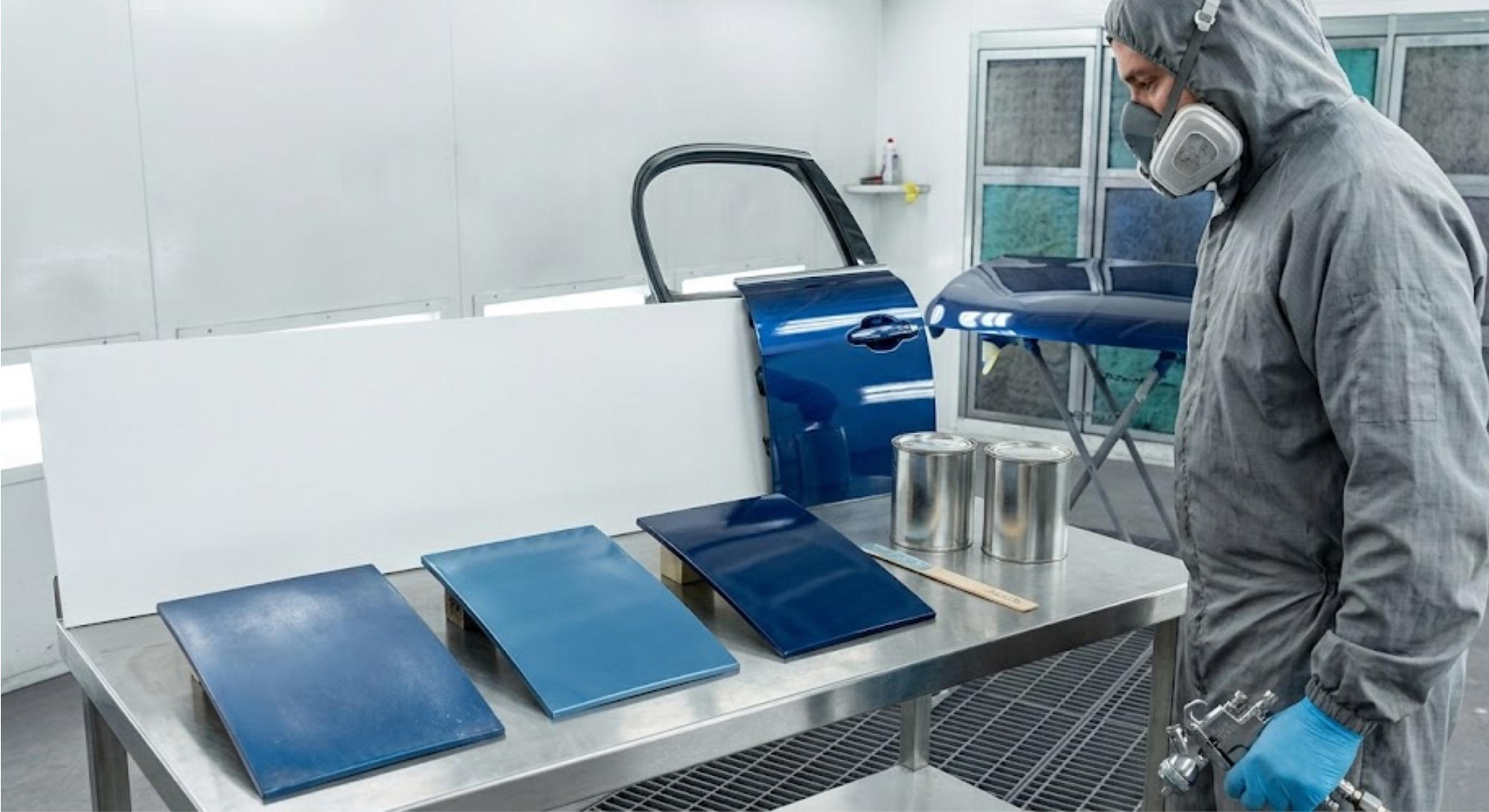
Whether restoring a classic muscle car, repairing a damaged fender, or executing a full custom respray, achieving an undetectable color match is the ultimate benchmark of quality in automotive refinishing. Vehicle owners expect seamless visual continuity across body panels, where fresh paint blends invisibly into surrounding original factory finishes.
However, matching automotive paint is far more complex than mixing pigments. Modern original equipment manufacturer (OEM) finishes rely on multi-stage paint systems incorporating complex mica pearls, aluminum metallic flakes, and tinted clear coats. Under varying light sources from direct natural sunlight to overcast skies and artificial LED shop lighting minor discrepancies in flake orientation or pigment density become immediately apparent.
This is where advanced base coat technology plays a decisive role. As the dedicated color layer in modern two-stage and three-stage paint applications, base coat paint provides the opacity, pigment precision, and metallic control necessary for flawless blending. Base coat ensures accurate color blending.
Here is a technical guide on how high-performance Automotive Basecoat Paint improves color matching accuracy, eliminates halo lines, and elevates refinishing results.
1. High Pigment Loading for Precise Opacity and Tint Accuracy
Achieving an exact color match begins with pigment concentration. Lower-quality paints often suffer from weak opacity, requiring technicians to apply excessive wet coats to achieve full coverage. Heavy film builds introduce color shifting, mottling, and prolonged dry times.
[ High Pigment Concentration ] ──► Complete Substrate Coverage ──► True OEM Color Tint
Advantages of Premium Base Coat Pigmentation:
- Rapid Hiding Power: Formulated with dense, finely ground inorganic and organic pigments, high-tier base coats achieve complete coverage (hiding) in just 2 to 3 medium passes.
- Consistent Color Reproduction: High pigment density ensures that the sprayed film accurately mirrors formula mixing codes without relying on underlying primer colors to alter the final hue.
- Reduced Material Usage: Achieving hiding in fewer coats minimizes material consumption and reduces total solvent load on the repair area.
2. Advanced Flake Control in Metallic and Pearl Finishes
Metallic and pearlescent finishes account for the majority of modern automotive colors. Matching these surfaces requires controlling not only the color tint but also the spatial alignment of microscopic aluminum flakes and mica particles.
┌─────────────────────────────────────────────────────────────────────────────┐
│                    METALLIC FLAKE ALIGNMENT & COLOR MATCHING                │
├──────────────────────────────┬──────────────────────────────────────────────┤
│ Application Variable         │ Impact on Metallic Color Perception          │
├──────────────────────────────┼──────────────────────────────────────────────┤
│ **Flakes Laying Flat (Ideal)**│ Maximum light reflection; matches factory    │
│                              │ side-cast and face-view brilliance.          │
├──────────────────────────────┼──────────────────────────────────────────────┤
│ **Flakes Standing Vertical** │ Absorbs light from side angles, causing the  │
│                              │ panel to appear darker (mottling/striping).  │
├──────────────────────────────┼──────────────────────────────────────────────┤
│ **Controlled Evaporation**   │ Specialized solvents lock particles in place │
│                              │ before they sink or pool unevenly.           │
└──────────────────────────────┴──────────────────────────────────────────────┘
Modern base coat chemistry incorporates advanced rheology control agents. These additives increase the viscosity of the paint film immediately upon contact with the panel, locking metallic flakes and pearl particles in a uniform, parallel orientation before they can sink or bunch together.
3. Facilitating Seamless Color Blending
Rarely do collision repair technicians paint a single panel edge-to-edge without blending into adjacent panels. Natural batch variations during vehicle manufacturing, prior repairs, and UV weathering mean that even a factory-matched paint code may differ slightly from a 5-year-old vehicle surface.
[ Repair Area (Full Hiding) ] ──► [ Feathered Blend Zone ] ──► [ Original Factory Finish ]
Base coat paints are engineered specifically to facilitate smooth feathering across blend zones:
- Controlled Wet-Edge Evaporation: Specialized reducers allow technicians to spray fine mist passes along panel edges without creating harsh dry overspray edges.
- Compatibility with Wet-Bed Blending Clear: Spraying a thin layer of transparent blending bed prior to applying base coat allows metallic particles to float smoothly at the margin, eliminating visible “halo” ring lines around repair areas.
- Low Film-Thickness Profile: Because base coat applies thin and cures to a flat, non-glossy finish, it creates no heavy ridge lines where old paint meets new.
4. Solvent vs. Waterborne Base Coats: Chemical Adaptability
The evolution from solvent-borne to modern waterborne base coat systems has significantly advanced color matching capabilities across the collision repair industry.
| Paint System Feature | Solvent-Borne Base Coat | Modern Waterborne Base Coat |
| Flake Orientation | Dependent on painter technique and spray pressure. | Natural latex suspension aligns particles uniformly. |
| Environmental Impact | Higher VOC emissions; requires strict booth ventilation. | Eco-friendly; low VOC compliance across all regions. |
| Color Metallic Control | Excellent versatility with fast-evaporating reducers. | Exceptional face-and-side color consistency. |
Waterborne base coats utilize water-based acrylic resin latexes that naturally force metallic flakes into flat, parallel positions as the water content evaporates, producing exceptional side-cast color accuracy that matches modern OEM factory finishes.
5. Standardized Spectrophotometer Integration
Modern color matching relies heavily on digital spectrophotometers cameras that analyze paint samples under controlled light angles to generate exact formula recipes.
High-grade automotive base coat systems are backed by extensive digital color libraries containing thousands of variant formulas for a single OEM color code. When paired with digital color matching tools, precise base coat mixing systems allow painters to match weathered, sun-faded, or metallic-shifted factory finishes with pinpoint precision.
Conclusion
Achieving a flawless, invisible paint repair requires a harmonious balance of technician skill, proper surface preparation, and advanced chemistry. High-performance automotive base coat paint provides the foundational pigment density, flake alignment control, and feathering versatility necessary to master modern OEM color matching. By investing in quality base coat systems, refinishing professionals guarantee seamless transitions, exceptional color depth, and long-lasting visual perfection.
Ready to achieve factory-accurate color matching on your next refinishing project? Explore premium refinishing solutions and technical color formulas at Automotive Base Coat today.
Frequently Asked Questions (FAQ)
Q: Why does my metallic paint look darker when viewed from the side?
A: This phenomenon, known as “flip” or “side-cast shift,” occurs when metallic flakes stand on end rather than lying flat. Adjusting spray gun distance, air pressure, or using a drop coat locks flakes parallel to the panel for proper light reflection.
Q: What is a blend bed, and how does it help color matching?
A: A blend bed (or color carrier) is a clear, unpigmented base coat layer sprayed over the blending area before applying color. It provides a smooth liquid bed that allows metallic flakes at the edge of the repair to melt in seamlessly without stacking or creating dark halos.
Q: How many coats of base coat are typically needed for full color hiding?
A: Most premium, high-pigment automotive base coats achieve full coverage in 2 to 3 medium passes, followed by a light drop coat for metallic alignment if required.