
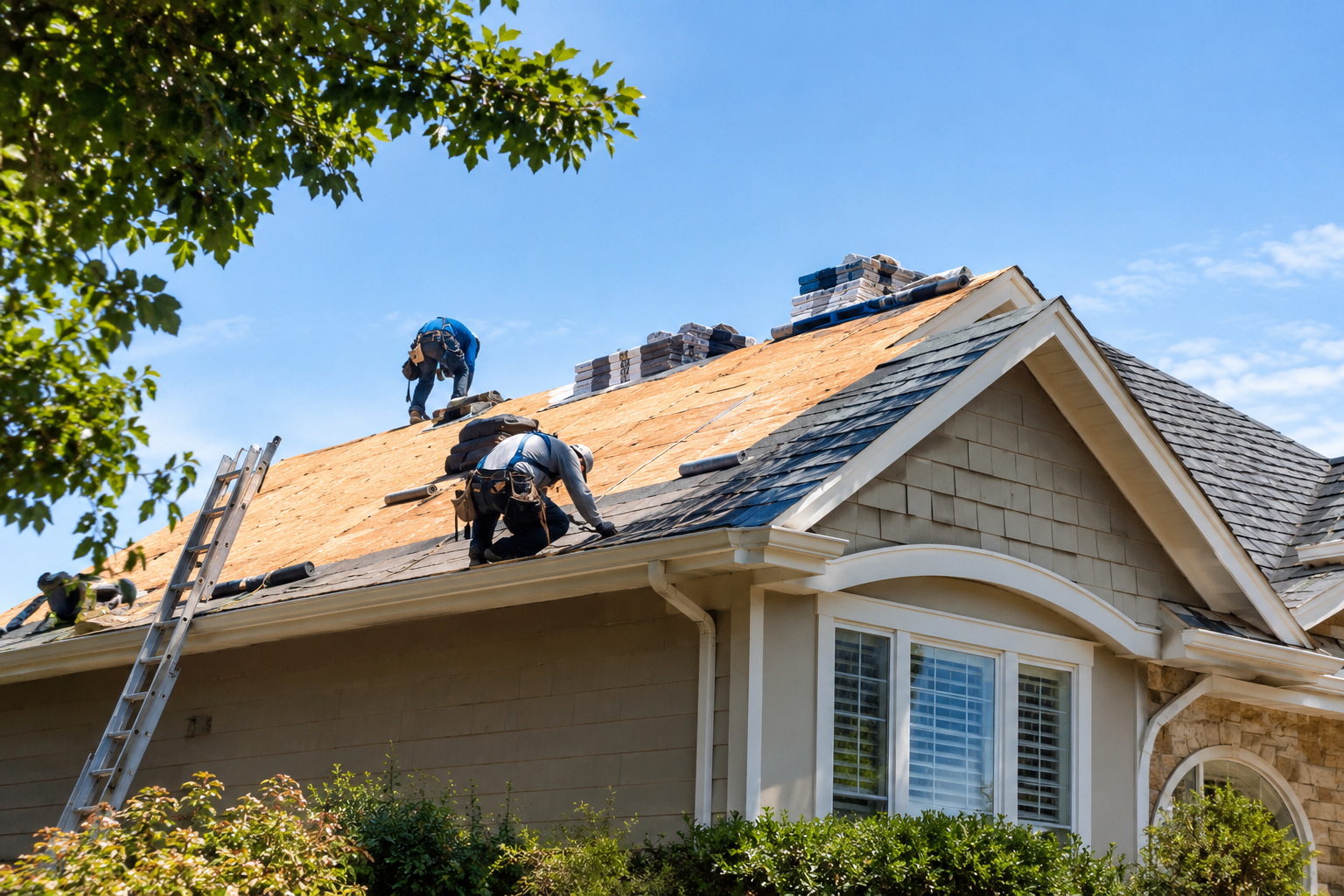
Signs Your Pasadena Home May Need a Roof Replacement
Not every roofing problem requires a complete replacement. Some issues, such as a few damaged shingles or isolated flashing problems, may be resolved through targeted repairs. However, widespread deterioration can indicate that replacing the entire roof is a more practical long-term solution.
Aging or Deteriorating Roofing Materials
Asphalt shingles gradually lose their protective qualities as they age. Homeowners may notice curling edges, cracked shingles, missing granules, or bald spots where the underlying material becomes exposed. Tile roofs can also experience cracked or displaced tiles, while the underlayment beneath them may deteriorate over time.
The expected lifespan of a roof depends on its material, installation quality, ventilation, and maintenance history. A professional inspection can help determine whether repairs are sufficient or a complete roof replacement is warranted.
Persistent Leaks and Water Damage
Water stains on ceilings, peeling paint, damp attic insulation, and mold-like growth can indicate moisture intrusion. Although some leaks originate from damaged flashing or plumbing vents, recurring problems across several areas may point to more extensive roofing deterioration.
Addressing leaks early helps prevent damage to insulation, drywall, framing, and other building components.
Storm or Sun-Related Damage
Pasadena receives substantial sunshine throughout the year, and prolonged ultraviolet exposure can contribute to the aging of roofing materials. Seasonal rain can also expose weaknesses in flashing, drainage systems, and underlayment.
After severe weather, homeowners should look for visible damage from the ground and arrange a professional inspection when necessary. Climbing onto a roof without appropriate safety equipment is not recommended.
What Happens Before the Replacement Begins?
Preparation is an important part of any successful roofing project. Before work starts, the contractor should assess the existing roof, discuss material options, explain the scope of work, and establish a realistic schedule.
The Initial Roof Inspection
The process typically begins with an inspection of the roofing surface, flashing, drainage areas, and accessible attic spaces. The contractor evaluates the condition of the existing materials and looks for signs of moisture damage, poor ventilation, or structural concerns.
The inspection findings help determine whether the roof can be repaired or whether replacement is the better option. Homeowners should ask for a clear explanation of the findings and a written estimate outlining the proposed work.
Selecting Roofing Materials
Choosing suitable roofing materials involves balancing appearance, durability, maintenance, and cost. Pasadena homes feature a variety of architectural styles, so the right material should complement the property while meeting applicable building requirements.
Common options include:
- Asphalt shingles: A popular choice because of their variety of colors, relatively straightforward installation, and range of price points.
- Clay or concrete tiles: Often selected for their appearance and durability, although the roof structure must be suitable for their weight.
- Metal roofing: Offers durability and can provide a distinctive modern or traditional appearance depending on the design.
- Other approved roofing systems: Certain properties may benefit from alternative materials suited to their architectural style, roof slope, and performance requirements.
Homeowners should discuss fire performance, energy efficiency, warranties, maintenance needs, and compatibility with the existing structure. In some neighborhoods, architectural guidelines or local requirements may also affect material choices.
Reviewing the Estimate and Schedule
Before approving the project, review the estimate carefully. It should identify the materials, labor, removal of existing roofing, disposal fees, flashing work, and other included services.
Ask how the contractor will handle damaged roof decking, unexpected repairs, and any additional costs that arise. Confirm whether permits are required and who will obtain them. A written agreement should also clarify payment terms, project milestones, warranty coverage, and cleanup responsibilities.
What Happens During a Roof Replacement?
Understanding the installation sequence helps homeowners know what to expect and why certain stages may take longer than others.
1. Property Preparation and Protection
Before removing roofing materials, the crew prepares the work area. This may include placing protective coverings around landscaping, positioning debris containers, and identifying safe access points.
Homeowners should move vehicles away from the immediate work area, secure outdoor furniture, and keep children and pets away from the construction zone. It is also helpful to remove fragile items from shelves because roof removal can create vibrations inside the house.
2. Removing the Old Roofing
The crew removes the existing roofing materials according to the agreed scope of work. Depending on the roof system, this may involve stripping asphalt shingles, removing damaged components, or lifting tiles to access the underlayment.
This stage can be noisy. Hammering, scraping, footsteps, and the movement of equipment are normal parts of the process. Homeowners who work remotely or have young children may want to plan around the loudest hours.
After removal, the crew can inspect the exposed roof decking for rot, water damage, or other problems that were hidden beneath the old materials.
3. Repairing the Roof Deck and Installing Underlayment
If the contractor discovers damaged decking, the affected sections may need replacement before installation continues. The contractor should explain any additional work and obtain approval according to the project agreement.
Next, the crew installs the appropriate underlayment and other protective components. Flashing around chimneys, skylights, vents, and roof intersections is particularly important because these locations can be vulnerable to leaks.
Proper installation of these hidden components is essential to the roof’s long-term performance.
4. Installing the New Roofing Materials
Once the preparation is complete, the crew installs the selected roofing system according to the manufacturer’s specifications and applicable building codes.
For shingle roofs, installation typically includes starter strips, shingles, ridge components, and properly positioned flashing. Tile and metal systems require their own installation procedures and supporting components.
Good workmanship matters as much as the appearance of the finished roof. Correct fastening, adequate ventilation, suitable drainage, and careful detailing help protect the home against future moisture problems.
5. Cleanup and Final Inspection
After installation, the crew removes construction debris and checks the property for loose materials. Contractors commonly use magnetic sweepers to collect stray nails around driveways and other accessible areas.
A final inspection should confirm that the roof has been installed properly and that flashing, ventilation, and drainage components are in place. Homeowners should also ask about required inspections, warranty documentation, and recommendations for ongoing maintenance.
How Long Does a Roof Replacement Take in Pasadena?
The duration of a roof replacement varies from one property to another. A relatively straightforward residential roof may take approximately one to three working days to replace, while larger, steeper, or more complicated roofs can require additional time.
Several factors influence the schedule:
- Roof size and complexity: Larger surfaces, multiple roof levels, and intricate designs require more labor.
- Roofing material: Some systems take longer to remove and install than others.
- Existing damage: Rotten decking or structural repairs can extend the project.
- Weather conditions: Rain, strong winds, or unsafe temperatures may delay certain activities.
- Permits and inspections: Administrative requirements and inspection scheduling can affect the overall timeline.
A contractor should provide an estimated start date and explain how weather or unforeseen repairs might change the schedule. Homeowners should distinguish between active installation time and the entire project timeline, which may include inspections, material delivery, and permit approval.
Will a Roof Replacement Disrupt Daily Life?
Roofing work inevitably creates some inconvenience, but a well-organized crew can limit unnecessary disruption. Noise is usually the most noticeable issue, especially during tear-off and installation. There may also be temporary restrictions on driveway access, parking, or movement around the property.
To prepare, homeowners can take several practical steps:
- Move vehicles away from the work zone before the crew arrives.
- Bring in patio furniture, decorations, and other items near the house.
- Keep pets indoors or arrange an alternative location during noisy work.
- Inform household members about the expected construction schedule.
- Protect delicate belongings stored in the attic.
- Confirm how the crew will access the property and where materials will be delivered.
If someone in the household works from home, has a newborn, or needs a quiet environment during certain hours, discussing these needs with the contractor in advance can help everyone plan appropriately.
Understanding Roof Replacement Costs
The cost of a roof replacement in Pasadena depends on several variables, so homeowners should avoid relying on a single average price without considering their property’s specific requirements.
Roof dimensions, slope, accessibility, material selection, labor, disposal, and the condition of the underlying structure all influence the final estimate. Additional costs may arise when the contractor discovers damaged decking, outdated flashing, or ventilation problems.
When comparing estimates, make sure each contractor is pricing a similar scope of work. A lower quote may exclude important components or provide less comprehensive cleanup and warranty coverage.
Ask contractors to explain material allowances, possible additional charges, payment milestones, and warranty terms. It is also sensible to verify licensing, insurance, references, and the company’s experience with similar residential roofing projects.
The goal is not simply to choose the lowest price. It is to select a qualified contractor who offers a clear scope of work, appropriate materials, and dependable installation.
How to Prepare Your Home for Installation Day
A little preparation can help the project proceed smoothly. Before the scheduled start date, confirm the delivery of materials, the expected arrival time, and the location of any equipment or debris containers.
Clear the driveway if it will be used by the roofing crew. Move garden decorations and fragile outdoor items away from the house. Inside, consider relocating breakable objects from attic storage areas and securing items that could shift because of construction vibrations.
You should also ask whether the contractor needs access to electrical outlets, a garage, or other parts of the property. Keep communication details available in case a question arises during installation.
Finally, discuss how the crew will protect the home if work cannot be completed in one day. Temporary coverings and an appropriate weather-protection plan are important when the roof is exposed during construction.
What to Check After the Roof Is Replaced
Once the project is finished, take time to review the completed work with the contractor. If possible, request photographs of important areas, particularly components that are difficult to see from the ground.
Confirm that the agreed materials were installed, the work area has been cleaned, and any identified decking repairs have been completed. Ask for copies of the final invoice, permits or inspection records when applicable, product warranties, and workmanship warranty information.
You should also understand the recommended maintenance schedule. Periodic professional inspections, keeping drainage pathways clear, and promptly addressing damaged flashing can help preserve the roof’s condition.
Avoid walking on the new roof yourself, especially if it is steep or made of fragile tile. Instead, arrange professional assessment when concerns arise.
Choosing the Right Roofing Contractor in Pasadena
A successful roof replacement depends on more than selecting attractive materials. The contractor should have relevant experience, provide clear documentation, communicate consistently, and follow applicable safety and building requirements.
Before signing an agreement, ask whether the company is appropriately licensed and insured, who will supervise the work, and whether subcontractors will be involved. Request references from previous customers and ask how the company handles workmanship concerns.
A reliable contractor should be willing to explain the installation process in plain language and answer questions without pressuring you into an immediate decision. Be cautious of vague estimates, unusually large upfront payment demands, or promises that sound too good to be true.
Homeowners should also verify local permit requirements and whether the selected roofing system meets applicable standards. Taking time to evaluate contractors can reduce the risk of avoidable repairs and disputes later.
Conclusion
Replacing a roof is a significant home improvement project, but understanding the process makes it easier to plan with confidence. From the initial inspection and material selection to installation, cleanup, and final inspection, each stage contributes to the roof’s durability and performance.
For Pasadena homeowners, local weather conditions, the home’s architectural style, and the condition of the existing roof all deserve consideration. Choosing appropriate materials and working with a qualified contractor can help protect the property for years to come.
With clear communication and practical preparation, a roof replacement can be completed with fewer surprises and less disruption to everyday life. The result should be a dependable roofing system that supports the home’s appearance, comfort, and long-term value.
Frequently Asked Questions
1. How long does a roof replacement take in Pasadena?
Many straightforward residential projects take approximately one to three working days. Larger roofs, complicated designs, structural repairs, and weather delays can extend the schedule.
2. How do I know if my roof needs replacement instead of repair?
Widespread shingle deterioration, recurring leaks, extensive water damage, and roofing materials near the end of their expected lifespan may indicate that replacement is appropriate. A professional inspection can help identify the most practical solution.
3. What is the best roofing material for a Pasadena home?
The best option depends on the home’s architectural style, structural capacity, budget, energy-efficiency goals, and maintenance preferences. Asphalt shingles, clay tiles, concrete tiles, and metal roofing may all be suitable in different circumstances.
4. Do I need a permit for a roof replacement in Pasadena?
Permit requirements depend on the scope of work, the property, and applicable local regulations. Ask your contractor to confirm the requirements with the relevant building department before work begins.
5. Can I stay in my home during roof replacement?
In most cases, homeowners can remain in their homes during installation. However, noise, vibrations, and restricted access to parts of the property are common. Discuss any special household needs with your contractor beforehand.
6. How much does a roof replacement cost?
Costs vary according to roof size, material, labor, accessibility, disposal requirements, and repairs to the underlying structure. Request detailed written estimates from qualified contractors to compare the total scope and value.
7. What should I do before the roofing crew arrives?
Move vehicles, protect fragile belongings, clear outdoor areas near the house, arrange for pets to stay away from the work zone, and confirm the contractor’s schedule and access requirements.
8. How can I maintain my new roof?
Arrange periodic inspections, keep gutters and drainage systems clear, monitor the attic for signs of moisture, and address damaged flashing or other concerns promptly. Follow the roofing manufacturer’s maintenance recommendations.