
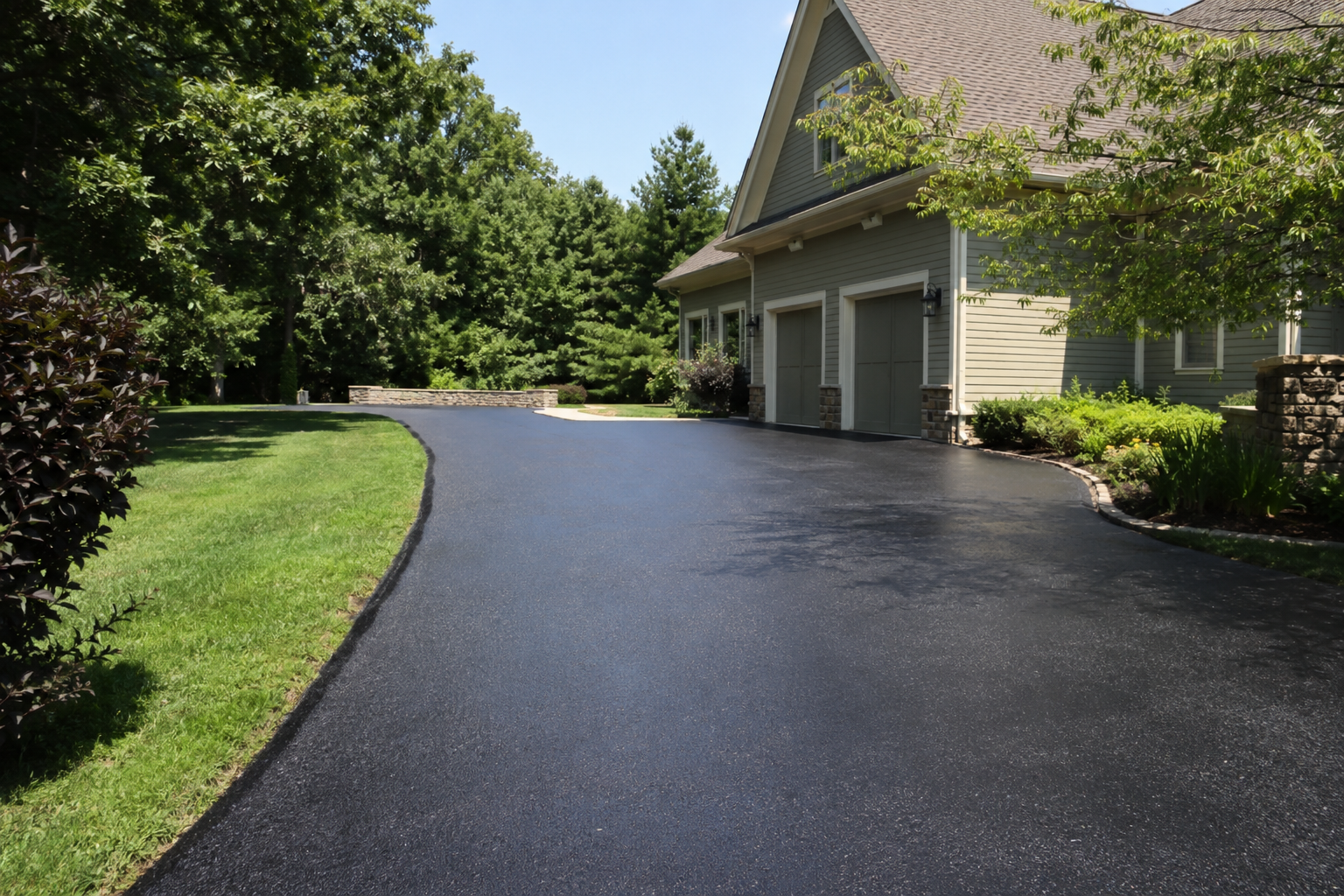
What Is Sealcoating?
So, what is sealcoating exactly?
Sealcoating is the application of a protective coating over an existing asphalt surface. The coating creates a barrier between the pavement and environmental elements that contribute to deterioration. Depending on the product and application, sealcoating materials can contain asphalt or refined tar-based binders, mineral fillers, water, and other additives.
The purpose is not to create a completely new pavement surface. Instead, sealcoating helps protect the existing asphalt from conditions that can accelerate aging.
Sealcoating shields asphalt from sun and water.
This protective function is particularly important because asphalt contains binding materials that can gradually oxidize when exposed to air and ultraviolet radiation. As asphalt ages, it can become less flexible and more susceptible to cracking and surface deterioration.
Federal Highway Administration resources recognize pavement preservation and maintenance treatments as important tools for extending pavement service life and improving pavement condition.
How Does Sealcoating Protect Asphalt?
One of the biggest advantages of sealcoating is that it provides an additional layer of protection over the asphalt.
Consider some of the common threats pavement faces every day.
Sun and UV Exposure
Constant exposure to sunlight contributes to oxidation and aging. Over time, asphalt can lose some of its flexibility, making the surface more vulnerable to cracks and other forms of deterioration.
A sealcoat can help limit direct exposure of the asphalt binder to the elements.
Water
Water is another major concern for asphalt. Small cracks and pavement openings can allow moisture to penetrate beneath the surface. Once water enters the pavement structure, it can contribute to weakening and additional damage.
Federal Highway Administration research on crack sealing emphasizes the importance of reducing water infiltration into pavement cracks.
Sealcoating is not a replacement for crack repair, but it can be an important part of an overall pavement maintenance strategy.
Oil and Automotive Fluids
Driveways and parking lots are frequently exposed to oil, gasoline, and other automotive fluids. These substances can affect asphalt and contribute to surface deterioration when spills are left untreated.
A properly selected sealcoat can provide additional protection against many common contaminants.
Traffic and General Wear
Cars, trucks, delivery vehicles, and other traffic gradually wear pavement. Parking areas can experience additional stress from turning tires, braking, acceleration, and repeated vehicle movement.
Sealcoating does not make asphalt indestructible, but regular maintenance can help preserve the pavement surface and delay more expensive deterioration.
Why Does Sealcoating Matter?
Understanding what is sealcoating is only part of the equation. Property owners also need to understand why it matters.
The biggest reason is preventive maintenance.
It is generally more practical to protect pavement while it is still in reasonably good condition than to wait until major structural problems appear. Federal Highway Administration materials note that preventive maintenance techniques can help improve pavement condition and extend service life, while treatment effectiveness depends significantly on the condition of pavement before treatment.
Sealcoating can therefore be viewed as an investment in pavement preservation rather than simply a cosmetic improvement.
Sealcoating Can Improve Appearance
A freshly sealcoated asphalt surface typically has a darker, more uniform appearance. This can make an older parking lot or driveway look cleaner and better maintained.
Appearance can be particularly important for commercial properties.
A parking lot is often one of the first parts of a business property customers see. Cracked, faded, and heavily weathered pavement can make an otherwise well-maintained property appear neglected.
Sealcoating, combined with crack repair and fresh pavement markings, can provide a significant visual improvement.
Sealcoating Is Not the Same as Asphalt Repair
An important point when learning what is sealcoating is understanding what it can and cannot do.
Sealcoating is a maintenance treatment. It is not designed to repair major structural failures.
For example, if asphalt has extensive potholes, severe alligator cracking, deep depressions, or major base failure, simply applying a sealcoat will not solve the underlying problem.
The pavement should be evaluated first.
Depending on its condition, maintenance may include:
- Crack filling or sealing
- Pothole repairs
- Asphalt patching
- Resurfacing
- Drainage improvements
- Sealcoating
- Full pavement replacement
The right treatment depends on the condition of the existing pavement.
What Happens During the Sealcoating Process?
A professional sealcoating project generally involves more than simply spreading coating over asphalt.
1. Inspecting the Pavement
The surface should first be evaluated for cracks, potholes, damaged areas, drainage issues, and other problems.
2. Cleaning the Surface
Dirt, leaves, loose material, oil, and debris should be removed. Proper surface preparation helps the coating adhere to the pavement.
3. Repairing Existing Damage
Significant cracks and damaged sections should be addressed before sealcoating. Applying a coating over serious pavement problems does not eliminate the underlying issue.
4. Applying the Sealcoat
The protective material is then applied according to the manufacturer’s specifications. Depending on the project and product, application may involve spraying, squeegeeing, or other professional techniques.
5. Allowing Adequate Curing Time
The surface needs appropriate time to cure before regular traffic returns. Weather conditions, product specifications, and the thickness of the application can affect curing requirements.
This is one reason professional preparation and application matter.
When Should Asphalt Be Sealcoated?
Timing depends on several factors, including pavement age, climate, traffic levels, surface condition, and previous maintenance.
New asphalt generally needs time to cure before sealcoating. Applying a protective treatment too soon can interfere with the pavement’s normal curing process.
Older asphalt should be evaluated based on its condition rather than its age alone.
Climate also matters. In areas such as Southwest Florida, intense sunlight, heat, rainfall, and humidity can place ongoing stress on outdoor pavement. A maintenance strategy should take local environmental conditions into consideration.
Property owners should also avoid thinking of sealcoating as a one-time solution. Pavement preservation works best when it is part of a broader maintenance plan.
Why Sealcoating Matters for Naples Properties
For homeowners and businesses in Southwest Florida, maintaining asphalt can be especially important. Outdoor pavement is continuously exposed to heat, sunlight, rain, moisture, and vehicle traffic.
A naples paving company can evaluate the condition of a driveway, parking lot, or other asphalt surface and determine whether sealcoating is appropriate.
Professional evaluation is valuable because not every pavement surface needs the same treatment. A property with minor surface aging may benefit from preventive maintenance, while severely damaged pavement may require more extensive repairs first.
Local paving professionals can also help property owners understand how crack repair, patching, sealcoating, striping, and resurfacing fit together as part of a long-term pavement maintenance plan.
Sealcoating and Long-Term Pavement Maintenance
A good pavement maintenance strategy should focus on preventing small problems from becoming large ones.
For example, a small crack may initially appear insignificant. But if it allows water to enter the pavement and the surrounding material continues to deteriorate, that small defect can eventually become much more expensive to address.
FHWA guidance identifies crack sealing and other pavement preservation techniques as methods used to reduce moisture infiltration and maintain pavement performance.
This is why property owners should look at sealcoating as one component of a larger maintenance program.
Regular inspections, timely crack repair, proper drainage, cleaning, and appropriate surface treatments can all contribute to better pavement management.
Is Sealcoating Worth It?
For pavement that is structurally sound and suitable for the treatment, sealcoating can be a worthwhile preventive maintenance investment.
The key is applying it at the appropriate time and using proper preparation.
Waiting until asphalt has severe structural damage can limit the benefits of surface treatments. FHWA research indicates that pavement condition before treatment is an important factor in how long maintenance benefits last.
In other words, maintenance works best when it is proactive rather than reactive.
If you have been searching for what is sealcoating, think of it as a protective step designed to help preserve asphalt before deterioration becomes a much larger problem.
Choosing the Right Paving Professional
Before hiring a contractor, property owners should consider the company’s experience, preparation process, materials, communication, and understanding of local pavement conditions.
Ask whether the contractor will inspect and repair existing pavement damage before applying the coating. It is also useful to ask about curing requirements, recommended maintenance intervals, and the type of sealcoat being used.
A reputable naples paving company should be able to explain whether sealcoating is appropriate for your pavement instead of recommending the same treatment for every property.
Final Thoughts
So, what is sealcoating?
It is a pavement preservation treatment that applies a protective coating over asphalt to help defend the surface against environmental exposure and everyday wear. While it cannot repair severe structural pavement failures, it can play an important role in maintaining asphalt that is still in suitable condition.
Sealcoating shields asphalt from sun and water.
For homeowners and property managers, the biggest takeaway is simple: asphalt maintenance is easier when it starts before major deterioration occurs. Regular inspections, timely repairs, and properly planned sealcoating can help keep pavement looking better and performing properly for longer.
Frequently Asked Questions
What is sealcoating used for?
Sealcoating is used to protect and preserve asphalt pavement. It creates a protective surface layer that can help reduce exposure to sunlight, water, and other elements that contribute to pavement aging.
Does sealcoating repair cracks?
No. Sealcoating is not a substitute for crack repair. Significant cracks should generally be cleaned and repaired before the sealcoat is applied.
How often should asphalt be sealcoated?
There is no universal schedule. The appropriate timing depends on pavement condition, traffic, climate, previous treatments, and the type of sealcoat used. A professional pavement evaluation can provide a more appropriate recommendation.
Can you sealcoat damaged asphalt?
It depends on the type and severity of the damage. Minor surface deterioration may be suitable for maintenance, while potholes, severe cracking, or structural failures may require repairs or resurfacing before sealcoating.
Does sealcoating make asphalt last longer?
Proper pavement preservation can help extend useful pavement life, although results depend on pavement condition, preparation, application quality, climate, traffic, and maintenance practices. FHWA research supports the broader role of preventive maintenance in extending pavement service life.
Is sealcoating only for parking lots?
No. Sealcoating can be used on suitable asphalt surfaces such as residential driveways, commercial parking lots, private roads, and other paved areas.
Why is professional sealcoating important?
Proper cleaning, preparation, repair, application, and curing all influence the performance of the finished surface. Professional contractors can also determine whether sealcoating is appropriate for the pavement’s current condition.