
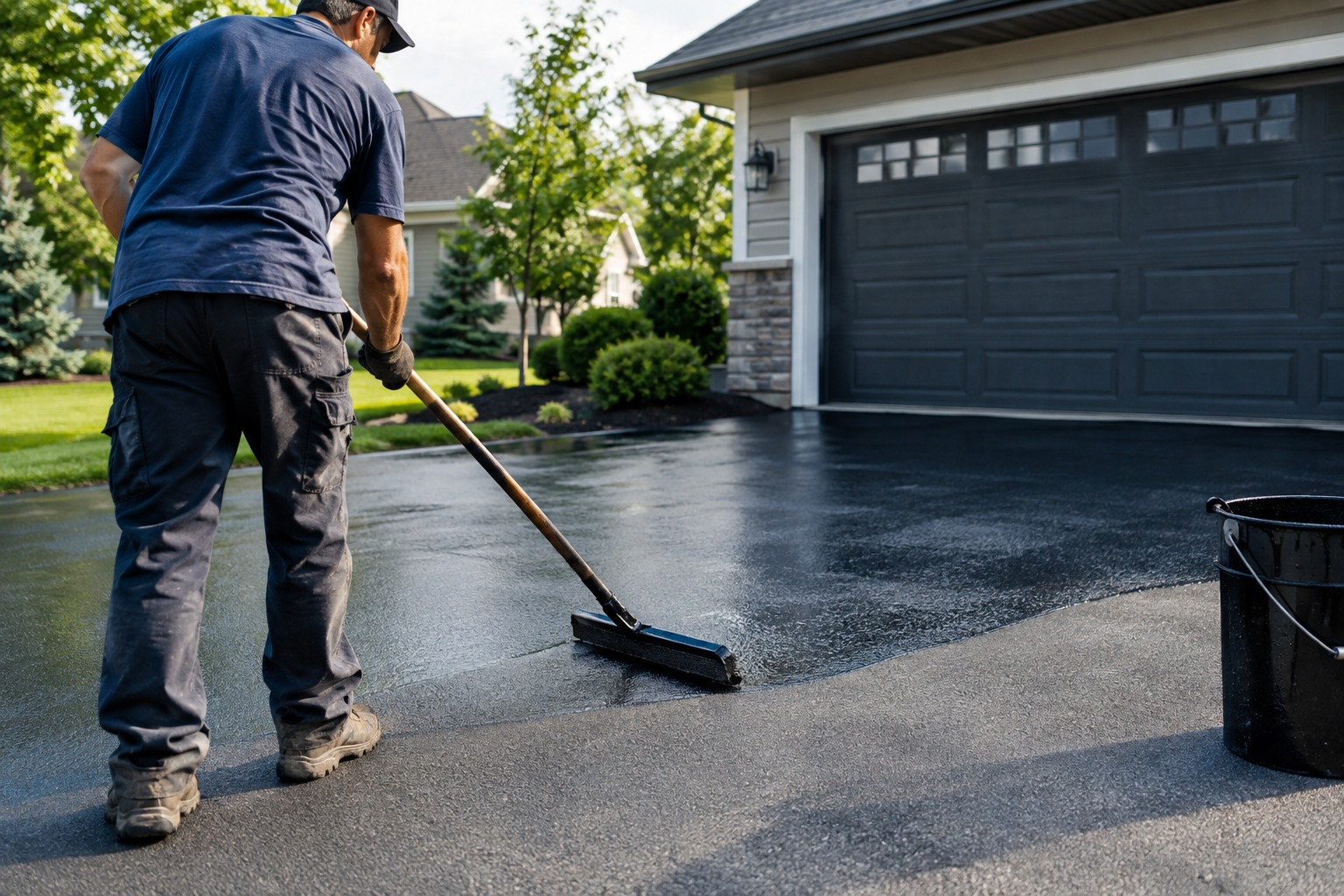
What Is Driveway Sealing?
Driveway sealing, also called sealcoating, involves applying a protective coating over an existing asphalt surface. The coating helps provide a barrier between the pavement and damaging environmental conditions.
Over time, asphalt is exposed to sunlight, rain, vehicle traffic, temperature changes, chemicals, and other elements. These factors can contribute to oxidation and surface deterioration. Sealcoating helps maintain the surface while giving an older driveway a darker, cleaner appearance.
It is important to understand that sealing is maintenance, not a replacement for major asphalt repairs. Significant potholes, structural cracks, drainage problems, and extensive pavement failure generally need to be addressed before or instead of simply applying a sealer.
How Much Does It Cost to Seal a Driveway in 2026?
So, how much does it cost to seal a driveway in practical terms?
A typical residential asphalt driveway can cost approximately $250 to $800 for professional sealing, although smaller projects may cost less and large or heavily damaged driveways may cost substantially more. Angi’s 2026 data reports an average around $500, with typical projects ranging from $250 to $800, depending on size, preparation, sealant, and number of coats.
Some 2026 estimates use a lower per-square-foot range for basic sealcoating, while others report higher rates when preparation, crack filling, and additional services are included. This explains why two contractors can provide noticeably different quotes for what appears to be the same driveway.
A rough planning guide might look like this:
| Driveway Size | Approximate Professional Cost |
|---|---|
| 300 sq. ft. | $180 to $400 |
| 500 sq. ft. | $250 to $550 |
| 600 sq. ft. | $275 to $650 |
| 800 sq. ft. | $350 to $850 |
| 1,000 sq. ft. | $450 to $1,000+ |
These figures are general planning estimates rather than guaranteed quotes. Local conditions and the condition of the asphalt can have a significant impact on the final price.
What Factors Affect Driveway Sealing Cost?
Several factors determine how much does it cost to seal a driveway for a specific property.
Driveway Size
Square footage is one of the most important considerations. A larger driveway requires more sealer, labor, and preparation.
However, smaller driveways do not necessarily have the lowest overall cost. Contractors often have minimum service charges that cover travel, equipment, labor, and setup. As a result, a small driveway can have a higher effective cost per square foot than a larger property.
Pavement Condition
A driveway that is relatively clean and intact is generally easier and less expensive to seal.
If the pavement contains cracks, oil stains, loose material, or other surface problems, additional preparation may be necessary. Crack filling is often priced separately and can add to the project total. Current industry estimates commonly place crack filling at approximately $0.50 to $3 per linear foot, depending on the type and amount of work required.
Cleaning and Preparation
Proper preparation is essential for good adhesion.
Contractors may need to sweep, blow, pressure wash, degrease oil spots, remove vegetation, and clean debris from the pavement before applying sealer. One 2026 cost guide estimates pressure washing alone at approximately $0.27 to $0.39 per square foot, although actual prices vary considerably by contractor and project.
Skipping preparation may make a quote look cheaper, but it can affect the quality and longevity of the finished coating.
Number of Coats
Some projects receive one coat, while others call for two coats or a specialized application. More material and labor naturally increase the total price.
When comparing estimates, ask contractors to specify how many coats are included. A quote that looks inexpensive may not be directly comparable to another quote if the application specifications are different.
Type of Sealer
Different sealers have different characteristics, costs, and application requirements. Water-based and asphalt-emulsion products are among the options available, while specialized products can cost more.
Instead of automatically choosing the least expensive product, homeowners should consider the pavement condition, climate, expected traffic, and recommendations from an experienced contractor.
Does Driveway Sealing Save Money?
In many cases, preventive maintenance can be more affordable than waiting until the pavement requires extensive repairs.
Sealcoating does not eliminate the need for future maintenance, but it can help preserve a sound asphalt surface. Keeping the pavement protected may reduce the likelihood of premature deterioration caused by weather and surface oxidation.
The key is timing. Sealing a driveway that already has severe structural damage will not restore the underlying pavement. If the asphalt is failing, homeowners should have the surface evaluated before spending money on a cosmetic coating.
How Often Should You Seal an Asphalt Driveway?
The ideal schedule depends on the driveway, local weather, traffic, and previous maintenance.
Some current industry guidance recommends resealing approximately every two to three years in demanding conditions, while other recommendations allow longer intervals in more moderate environments.
Rather than automatically sealing every year, inspect the pavement regularly. Look for fading, surface oxidation, small cracks, and other signs that the asphalt is losing its protective surface.
Over-sealing can also create problems. The objective is to maintain the asphalt appropriately, not continuously build up layers of coating.
Is DIY Driveway Sealing Cheaper?
DIY sealing can reduce labor costs, but homeowners still need to purchase sealer, cleaning supplies, application tools, and potentially crack-filling materials.
Professional work costs more upfront, but an experienced crew can prepare the pavement, apply the appropriate amount of product, address problem areas, and create a more consistent finish.
For a homeowner with a small, straightforward driveway and adequate time, DIY may be an option. However, larger driveways or surfaces requiring significant preparation can make professional service worthwhile.
When Should You Hire a Professional?
Professional sealing may be the better choice when the driveway has extensive cracking, oil contamination, difficult access, or a large surface area.
A professional can also help determine whether the driveway actually needs sealing or whether it requires repairs first.
If you are comparing estimates, ask each contractor whether the quote includes cleaning, crack filling, patching, number of coats, materials, and labor. This makes it easier to compare proposals fairly.
Homeowners in Southwest Florida may also want to work with an experienced naples paving company familiar with local pavement conditions and maintenance requirements.
How to Get an Accurate Driveway Sealing Estimate
Knowing how much does it cost to seal a driveway gives you a useful starting point, but an on-site evaluation provides a much more accurate estimate.
Start by measuring the approximate length and width of the driveway. Then identify visible cracks, stains, potholes, drainage concerns, and areas where the asphalt appears worn.
When contacting contractors, ask for a written estimate that explains:
- Total driveway square footage
- Type of sealer being used
- Number of coats
- Cleaning and preparation
- Crack filling
- Patching or repairs
- Labor and materials
- Minimum service charges
- Expected maintenance schedule
Getting multiple estimates can help you identify unusually high or suspiciously low bids. The lowest price is not always the best value if it excludes important preparation or uses a different application process.
Is Driveway Sealing Worth the Cost?
For a driveway with structurally sound asphalt, sealing can be a practical maintenance investment. It can refresh the appearance of the pavement while helping protect the surface from environmental exposure.
The most important consideration is not simply how much does it cost to seal a driveway, but what you receive for that price.
A professional quote that includes thorough preparation, quality materials, appropriate application, and attention to existing cracks may provide better long-term value than a bargain quote that skips essential steps.
For homeowners maintaining asphalt in and around Naples, working with a qualified naples paving company can make it easier to understand the condition of the driveway and determine whether sealing is the appropriate next step.
Frequently Asked Questions
How much does it cost to seal a driveway?
Most residential asphalt driveway sealing projects can cost approximately $250 to $800, although the final price depends on driveway size, condition, preparation, sealant, and local labor costs. Some 2026 estimates place the broader range around $180 to $850.
How much does it cost to seal a 600-square-foot driveway?
A 600-square-foot driveway may cost roughly $275 to $650 for professional sealing, depending on local pricing and preparation requirements. Additional crack filling or repairs can increase the total.
Does driveway sealing fix cracks?
Sealcoating is primarily a protective maintenance treatment. It does not repair significant structural cracks. Cracks generally need to be cleaned and filled separately before sealing.
How often should an asphalt driveway be sealed?
Many homeowners reseal every two to three years, although the appropriate schedule depends on pavement condition, climate, traffic, and the type of sealer used.
Is it cheaper to seal a driveway yourself?
DIY sealing can reduce labor expenses, but homeowners still need to purchase materials and equipment. Professional service may provide better results when extensive preparation or repairs are required.
Can you seal a damaged driveway?
Minor surface wear may be suitable for sealing after proper preparation. However, severe cracking, potholes, structural failure, or drainage issues should generally be repaired before applying a protective coating.