
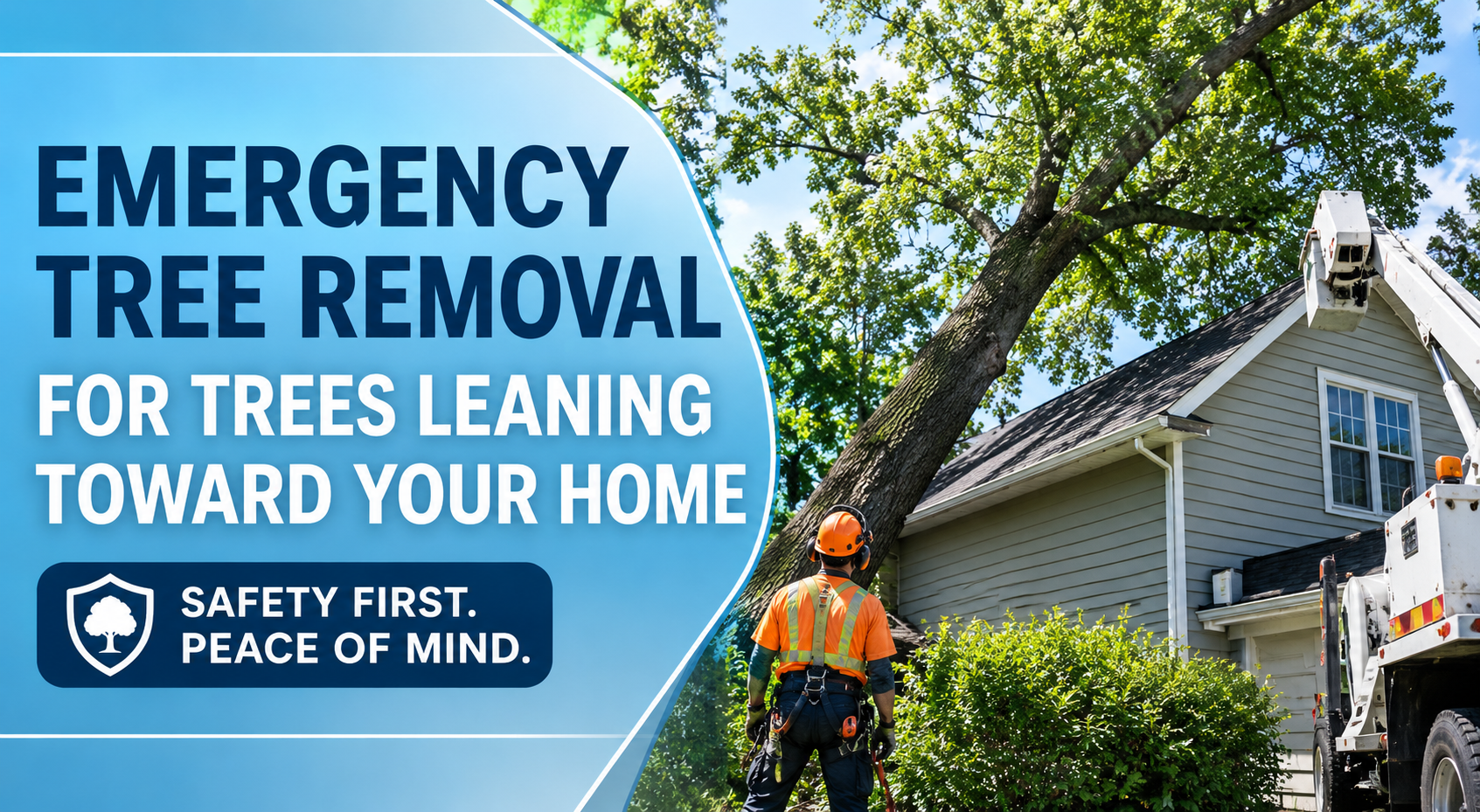
A tree can add beauty, shade, and value to your property, but a tree that begins leaning toward your home can quickly become a serious safety concern. While some trees naturally grow at an angle, sudden or increasing movement may indicate structural instability. When a tree is leaning toward a house, garage, fence, or other important structure, it is important to understand the risks and know when professional removal may be necessary.
Why a Leaning Tree Can Be Dangerous
Not every leaning tree is an immediate emergency. Some trees develop a natural lean as they grow, particularly when they are reaching toward sunlight. However, a tree that recently started leaning or has continued to shift should be evaluated by a qualified tree professional.
A leaning tree may have damaged roots, a weakened trunk, soil instability, or structural defects. These problems can become worse during severe weather. Strong winds and heavy rain can place additional pressure on the tree, increasing the possibility of falling branches or complete tree failure.
The direction of the lean is also important. A tree leaning away from structures may still pose a hazard to people, vehicles, utility lines, or neighboring properties. A tree leaning directly toward your home presents an even greater concern because a fall could cause extensive property damage.
Signs a Leaning Tree May Need Emergency Removal
Sudden Changes in Tree Position
One of the clearest warning signs is a noticeable change in the tree’s position. If a tree that was previously upright suddenly begins leaning, there may be an underlying root or soil problem.
Homeowners should look around the base of the tree for changes in the soil. Raised ground, exposed roots, cracks, or soil separation can indicate that the tree is becoming unstable.
Cracks in the Trunk or Large Branches
Large cracks in the trunk can weaken a tree and increase the risk of failure. Cracks may develop after storms, freezing temperatures, heavy winds, or other forms of stress.
Large branches with visible splits can also fall unexpectedly. When cracks occur along with a significant lean, professional assessment should be arranged as soon as possible.
Uprooted or Damaged Roots
Tree roots provide the support necessary to keep a tree stable. If roots have been damaged by construction, erosion, flooding, excavation, or severe weather, the tree may become unstable.
A leaning tree with exposed or lifting roots should not be ignored. Even if the tree appears secure during calm weather, additional rain or wind can cause it to shift further.
When Emergency Tree Removal May Be Necessary
Emergency tree removal for leaning trees may be necessary when a tree begins shifting toward your home, garage, or outdoor living space. A lean can become more dangerous over time, especially after rain, wind, or soil movement.
When the tree’s stability is compromised and it poses an immediate threat to people or property, waiting for the problem to resolve naturally is not a safe strategy. A qualified tree service can inspect the tree, determine the level of risk, and recommend the safest solution.
In some cases, the tree may be stabilized through cabling, bracing, pruning, or other methods. However, when the tree has severe structural damage or is likely to fall, removal may be the safest option.
What to Do When a Tree Is Leaning Toward Your Home
Keep People Away From the Area
If you notice a tree moving or leaning toward your home, keep family members, children, and pets away from the area. Do not stand underneath the tree or attempt to inspect damaged branches yourself.
Vehicles should also be moved away from the potential fall zone when it can be done safely.
Avoid DIY Tree Removal
Removing a large leaning tree is not a typical do-it-yourself project. The direction of the lean, tree height, branch weight, root condition, and nearby structures all affect how the tree should be handled.
Attempting to cut the tree without proper equipment and experience can make the situation much more dangerous. A professional tree removal crew understands how to control the removal process and reduce risks to surrounding property.
Contact a Tree Removal Professional
A professional can evaluate the tree and determine whether emergency removal is necessary. The assessment may include examining the trunk, roots, surrounding soil, branches, and direction of the lean.
If the tree is considered hazardous, the crew can develop a removal plan based on the surrounding structures and available space.
How Professional Tree Removal Helps Protect Your Property
Professional tree removal is about more than cutting down a tree. It requires careful planning to control where branches and sections of the trunk will fall.
When a tree is leaning toward a home, the removal process may involve specialized equipment and techniques. Professionals can identify potential hazards such as power lines, fences, buildings, landscaping, and narrow access areas.
Proper removal can help reduce the possibility of additional property damage. It also allows the hazardous tree to be removed before it falls unexpectedly during a storm.
Preventing Future Tree Emergencies
Regular tree inspections can help homeowners identify problems before they become urgent. Trees should be checked for dead branches, trunk damage, root problems, disease, decay, and unusual movement.
After severe weather, inspect your property from a safe distance. Look for newly leaning trees, broken branches, exposed roots, and changes in the soil around tree bases.
Proper pruning can also help maintain healthy tree structure. Removing weak or dead branches may reduce certain risks and improve the overall condition of the tree.
Homeowners should also avoid damaging tree roots during landscaping or construction projects. Protecting the root system can help maintain long-term stability.
FAQs About Emergency Tree Removal for Leaning Trees
Is every leaning tree dangerous?
No. Some trees naturally grow with a slight lean and may remain stable for many years. However, a sudden or worsening lean should always be taken seriously, especially when the tree is close to a home or other structure.
What should I do if a tree suddenly leans toward my house?
Keep people and pets away from the area and avoid approaching the tree. Contact a qualified tree removal professional for an assessment. If the tree is contacting power lines, stay away and contact the appropriate utility company or emergency service.
Can a leaning tree be saved?
In some situations, a leaning tree can be stabilized through professional pruning, cabling, bracing, or other treatments. The best solution depends on the cause and severity of the lean, as well as the tree’s overall health.
Can I remove a leaning tree myself?
DIY removal can be extremely dangerous when a tree is large, unstable, or positioned near a structure. Professional equipment, planning, and experience are often necessary to safely manage the removal.
How quickly should I address a tree leaning toward my home?
A tree that is suddenly leaning, shifting, cracked, uprooted, or damaged after a storm should be addressed promptly. The greater the potential impact on people or property, the more urgent the situation becomes.
Conclusion
A tree leaning toward your home should never be dismissed as a minor landscaping issue. Changes in tree position can indicate root damage, soil instability, structural weakness, or other hazards that may become worse during severe weather.
Knowing the warning signs and contacting a professional when a tree becomes unstable can help protect your home, family, vehicles, and surrounding property. When emergency removal is necessary, professional tree crews can assess the situation and use appropriate techniques to safely manage the hazardous tree.