
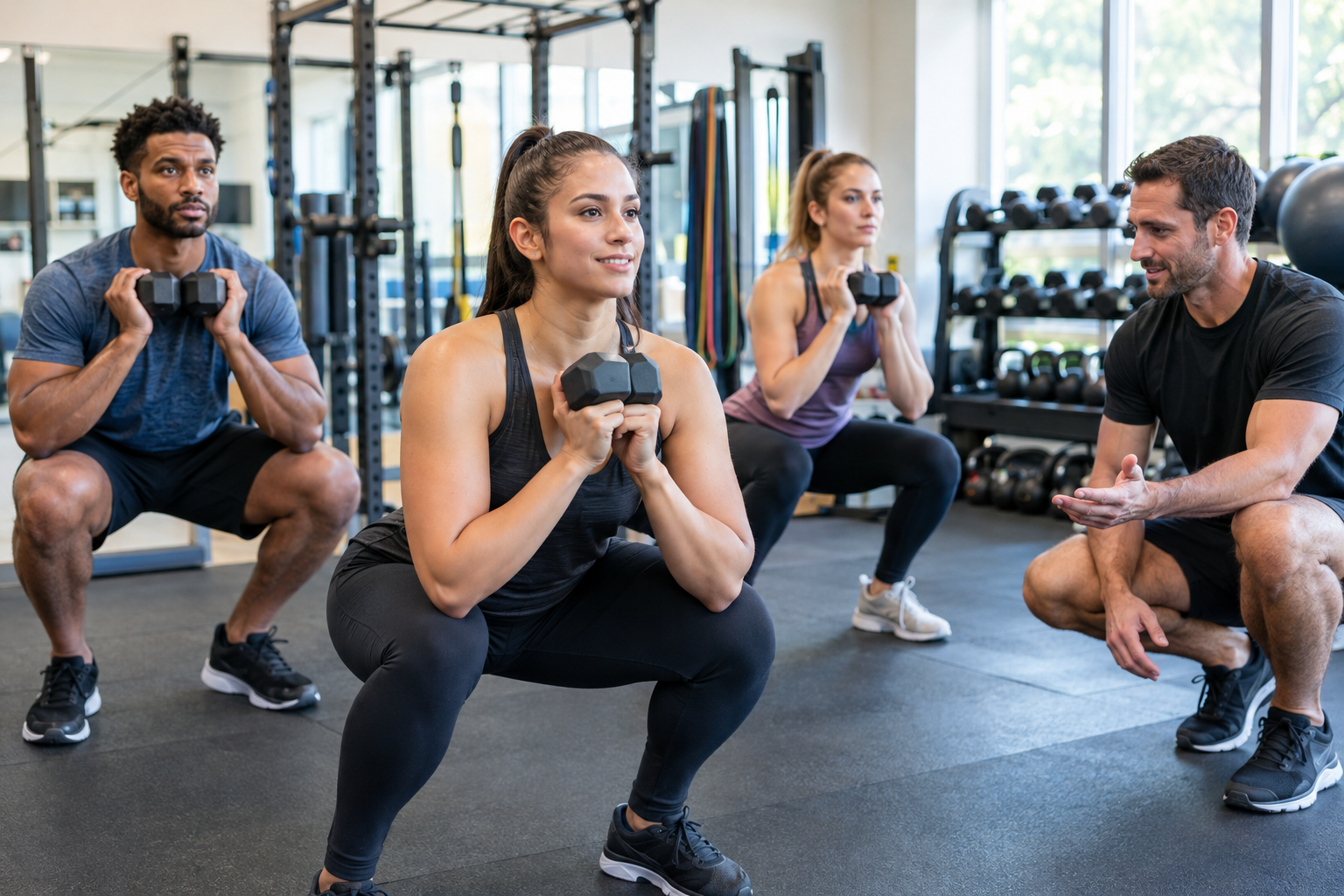
What Is Semi-Private Personal Training?
Semi-private personal training combines elements of one-on-one coaching and small-group exercise. A trainer typically works with a limited number of participants during a session, providing instruction, correcting exercise technique, and helping each person work toward individual goals.
Unlike a traditional group fitness class, where everyone generally follows the same workout, semi-private training allows for adjustments based on each participant’s ability, experience, and physical needs.
For example, two people might attend the same session with different objectives. One participant may want to improve overall strength, while another may be working toward better mobility and cardiovascular fitness. The trainer can incorporate appropriate exercises and modifications into the shared session.
This approach can be particularly useful for beginners who need guidance but also appreciate the encouragement that comes from exercising with others.
When exploring semi-private personal training Charlotte options, look for a program that keeps group sizes manageable and provides meaningful individual attention. The goal is to receive coaching that supports personal progress without losing the advantages of a shared training environment.
Why Accountability Matters in a Fitness Routine
Motivation is helpful when beginning a fitness program, but it does not always last. Busy schedules, stressful workdays, travel, and tiredness can make skipping a workout feel easier than following through.
Accountability helps bridge the gap between setting a goal and taking consistent action.
Accountability drives consistency. When you schedule a training session, know that a coach expects you to attend, and become familiar with other participants, you have more reasons to follow through with your plan.
Accountability can support fitness progress in several ways:
- Scheduled sessions: Setting aside specific training times makes exercise a planned commitment rather than an optional activity.
- Professional guidance: A trainer can help you understand what to do and how to perform exercises correctly.
- Progress tracking: Regular assessments help you recognize improvements in strength, endurance, mobility, and workout performance.
- Social encouragement: Seeing familiar faces can make workouts more enjoyable and help you feel connected to your fitness routine.
- Consistent feedback: A trainer can identify areas for improvement and suggest realistic adjustments when progress slows.
These benefits are especially valuable for people who have repeatedly started and stopped exercise programs. Rather than relying on willpower alone, they can establish a system that encourages regular participation.
The Benefits of Training With a Small Group
One of the main advantages of semi-private training is the combination of personalized instruction and a shared experience. Participants can receive professional coaching while benefiting from the energy and encouragement of others.
Personalized Coaching Without Training Alone
Exercising independently requires you to choose appropriate movements, determine how much weight to use, plan your workout, and monitor your technique. This can become overwhelming, especially if you are new to strength training.
A qualified trainer takes much of that guesswork away. You can receive guidance on exercise selection, movement quality, and progression while still working toward your own goals.
The trainer can also offer modifications when an exercise is too difficult or does not suit your current abilities. This helps participants develop confidence while learning to move safely and effectively.
Encouragement From Other Participants
Working alongside a small group creates opportunities for positive social interaction. Participants can celebrate progress, share experiences, and encourage one another through challenging workouts.
This atmosphere may make exercise feel less intimidating than entering a gym alone. It can also make sessions more enjoyable, helping people associate fitness with a positive experience instead of another obligation.
The most effective training environments encourage cooperation rather than unhealthy competition. Everyone should be able to progress at a suitable pace without feeling pressured to match another person’s performance.
Structure That Supports Long-Term Habits
A consistent schedule gives exercise a regular place in your week. When sessions become part of your routine, you may spend less time negotiating with yourself about whether to work out.
Over time, these repeated actions can help turn exercise into a sustainable habit. The focus shifts from achieving a quick result to maintaining behaviors that support long-term health and fitness.
Who Can Benefit From Semi-Private Personal Training?
Semi-private personal training can suit a wide range of adults, depending on the trainer’s qualifications, the program structure, and the participant’s individual needs.
Beginners Starting a Fitness Journey
People who are new to exercise often benefit from clear instructions and a supportive environment. Learning proper technique early can build confidence and make workouts easier to navigate.
A trainer can introduce basic movements, explain how to use equipment, and gradually increase exercise difficulty as strength and coordination improve.
Busy Professionals
Work commitments can make it difficult to maintain a fitness schedule. A structured training appointment can help busy professionals reserve time for exercise and avoid leaving their workouts until the end of an unpredictable day.
Choosing sessions that fit a realistic weekly schedule is essential. Two or three manageable workouts may be more sustainable than an ambitious plan that repeatedly conflicts with work responsibilities.
Adults Focused on Strength and Healthy Aging
Strength training can help adults maintain muscle strength, support everyday movement, and improve physical capacity as they age. Activities such as lifting groceries, climbing stairs, carrying children, and getting up from a low chair all depend on functional strength.
A well-designed program can incorporate resistance exercises, balance activities, mobility work, and gradual progression based on individual ability.
Adults with chronic health conditions, significant pain, or movement limitations should consult an appropriate healthcare professional when needed and communicate relevant restrictions to their trainer before starting.
People Who Struggle With Consistency
Some individuals understand the importance of exercise but have difficulty maintaining a routine. They may enjoy working out once they arrive but struggle to get started on their own.
Semi-private training provides a scheduled commitment and a familiar environment that can make showing up easier. Over time, repeated attendance can help create the consistency needed to support meaningful progress.
How to Choose the Right Semi-Private Training Program in Charlotte
Not every training program offers the same level of coaching, flexibility, or support. Comparing a few important factors can help you choose an option that fits your needs.
Evaluate Trainer Qualifications and Experience
Look for trainers with recognized certifications, relevant experience, and a clear understanding of exercise technique, programming, and appropriate modifications.
A good trainer should ask about your goals, previous exercise experience, current activity level, and any limitations that could affect your workouts. They should also explain how the program will be adjusted as you improve.
Ask About Group Size
The number of participants can affect how much individual attention you receive. A smaller group may allow a trainer to observe technique more closely, provide feedback, and make adjustments when necessary.
Ask how many people typically attend each session and whether the trainer follows individualized plans or uses the same workout for everyone.
Look for Progress Tracking
Effective training should include a way to evaluate progress. Depending on your goals, this may involve tracking the weights you lift, the number of repetitions you complete, improvements in movement quality, or changes in endurance.
Progress is not always reflected by the scale. Being able to perform an exercise with better control, recover more comfortably between sets, or complete daily activities with less effort can also be meaningful achievements.
Consider Scheduling and Location
Convenience plays an important role in accountability. A training facility that is difficult to reach or offers sessions at unsuitable times may make consistent attendance harder.
Before committing, review the available schedule, location, cancellation policies, and membership terms. Choose a program that works with your real-life responsibilities rather than one that depends on an idealized schedule.
Understand the Coaching Approach
A supportive trainer should provide constructive feedback without using embarrassment or intimidation as motivation. Look for an environment where questions are welcomed, individual differences are respected, and progress is measured against personal goals.
The right program should challenge you while still allowing room for learning, recovery, and gradual improvement.
Building Accountability Beyond the Gym
Although scheduled workouts are valuable, lasting fitness habits extend beyond individual training sessions. The choices you make throughout the week can support the progress you achieve with your trainer.
Start by setting realistic goals. Instead of committing to an exercise schedule that feels impossible to maintain, choose a frequency that fits your current lifestyle. You can adjust your plan as your routine becomes more established.
Track your attendance and workouts. A simple calendar or training log can help you recognize patterns, identify barriers, and celebrate progress that might otherwise go unnoticed.
Communicate honestly with your trainer. If work becomes especially demanding or a particular exercise feels uncomfortable, discuss the issue instead of disappearing from your routine. A good coach can help you identify practical adjustments.
Recovery also matters. Adequate sleep, balanced nutrition, hydration, and rest between demanding sessions all contribute to your ability to train consistently. More exercise is not automatically better if it leaves you exhausted or unable to recover.
Finally, remember that consistency does not mean perfection. Missing a session does not erase previous progress. The important step is returning to your routine rather than allowing one disruption to become several weeks away from exercise.
What to Expect During Your First Sessions
Your first semi-private training sessions should help you become comfortable with the trainer, the facility, and the workout format.
Depending on the program, the process may begin with a conversation about your goals, exercise history, and current activity level. The trainer may also assess basic movement patterns and discuss any relevant limitations.
You can then expect to learn foundational exercises and become familiar with the equipment. The trainer should demonstrate movements, explain appropriate technique, and help you choose suitable resistance levels.
As sessions continue, your workouts may gradually become more challenging. The trainer can adjust repetitions, resistance, rest periods, and exercise variations according to your ability and progress.
You do not need to be in excellent shape before joining a program. A suitable training plan should meet you where you are and provide a reasonable path toward improvement.
Making Fitness a Sustainable Part of Your Life
The best fitness program is not necessarily the most intense or complicated. It is the one you can follow consistently, adapt when circumstances change, and maintain as your goals evolve.
For many people, semi-private personal training provides a useful middle ground between independent workouts and individual coaching. Participants receive professional direction, benefit from a structured schedule, and share the experience with others who are working toward their own goals.
Choosing semi-private personal training Charlotte residents can fit into their routines may help remove common obstacles to exercise, from uncertainty about what to do to difficulty staying motivated.
With realistic expectations, appropriate coaching, and regular attendance, you can build strength, improve fitness, and develop habits that support long-term well-being. The real value of accountability is not simply getting through today’s workout. It is creating a routine that helps you keep showing up, even when life becomes busy.
Frequently Asked Questions
What is semi-private personal training?
Semi-private personal training involves a trainer coaching a small number of participants during the same session. Participants can receive individualized exercise guidance while benefiting from the motivation and support of a shared training environment.
How does semi-private personal training help with accountability?
Scheduled sessions, trainer feedback, progress tracking, and encouragement from other participants can make it easier to maintain a consistent workout routine. These structures help turn exercise into a regular commitment.
Is semi-private personal training suitable for beginners?
Yes. Beginners can benefit from professional instruction, exercise demonstrations, and appropriate modifications. Look for a program that accommodates different experience levels and provides enough individual attention.
How often should I attend semi-private personal training sessions?
The ideal frequency depends on your goals, fitness level, schedule, and recovery needs. Many adults begin with two or three sessions per week and adjust their routine as their fitness improves.
Is semi-private personal training different from group fitness classes?
Yes. Semi-private training generally provides more individualized coaching and exercise adjustments than a traditional group fitness class. However, group sizes and coaching methods vary, so ask each provider how its sessions are structured.
How can I choose semi-private personal training in Charlotte?
Compare trainer qualifications, group size, scheduling, progress tracking, pricing, and the level of individualized instruction. Choose a program that fits your lifestyle and provides a supportive environment for achieving your goals.