
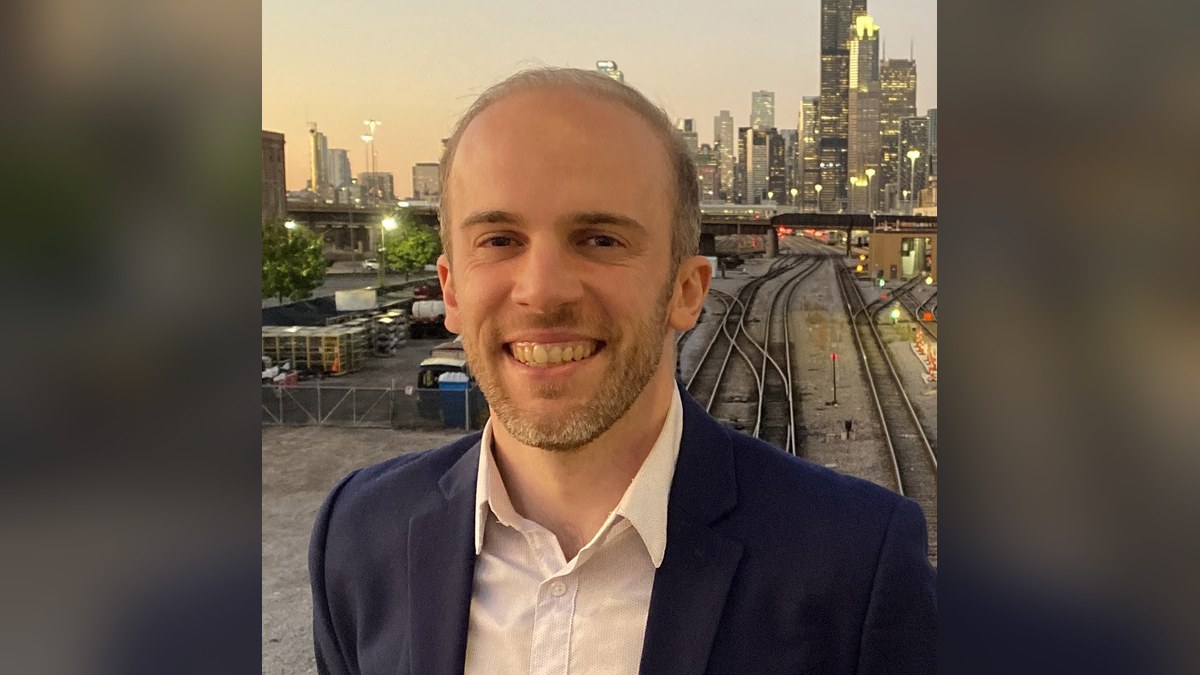
Ward Pettibone’s UCLA project captures activity from the prefrontal cortex, motor cortex, hippocampus and striatum at the same time during the sleep that follows a spatial learning task.
Pettibone is a neuroscientist and PhD candidate at UCLA. His UCLA neuroscience research asks how those four regions sleep after learning, and whether their sleep affects learning.
Each of the four regions plays a distinct role in learning. Capturing them together lets the project compare their sleep states one 10-second epoch at a time.
Four regions with distinct jobs in learning
The hippocampus is central to spatial memory, the memory of where things are. Some of its neurons, called place cells, fire when an animal occupies a particular location.
The prefrontal cortex supports planning and flexible behavior. It helps the brain change strategy when a rule or goal changes. Communication between the prefrontal cortex and the hippocampus is a major focus of research on updating memories.
The striatum links actions to rewards. Over repeated trials, it helps turn rewarded choices into habits.
The motor cortex plans and carries out movement. In a spatial task, it drives each step toward a goal.
Navigation research has long described two systems at work. The hippocampus supports a flexible, map-based strategy, and the striatum supports fixed routes learned through repetition.
Pettibone designed and built custom local field potential electrodes so that all four regions could be captured simultaneously. Electrophysiology, behavioral assays and machine learning make up his methods.
A hidden goal tests spatial learning
Subjects learn the Hidden Goal Task. In it, remaining within an unmarked location leads to a reward.
Nothing marks the rewarded spot, so finding it depends on learning where it is. A fully automated apparatus, which Pettibone designed, built and programmed, runs every session.
That pairing of task and recordings makes the project a piece of UCLA neuroscience research on spatial learning and sleep. Both are measured in the same subjects across the same four regions.
The goal moves every day
The protocol runs across seven days. Each day begins by retesting subjects on the spot they learned the previous day.
After the retest, the rewarded location changes, and subjects learn a new spot. Pettibone’s current work centers on place recall and the flexible updating of place memories.
The daily retest measures recall of the old location. The moving goal requires subjects to update a place memory they formed a day earlier.
Because every session is followed by sleep monitoring, sleep in all four regions can be compared across all seven days of the protocol.
Local sleep is scored region by region
After each session, the four regions are monitored together while subjects have an opportunity to sleep. Monitoring lasts about 23 hours a day, since local sleep can occur in the light phase or the dark phase.
Sleep states unfold over minutes to hours, so a single sleep period holds many transitions between them. Scoring treats each region separately, in 10-second epochs. Every epoch is labeled wake, slow-wave sleep, transition-to-REM or REM.
If even one region’s label differs from the rest, the epoch is counted as local sleep. Local sleep has been observed in humans and rodents.
It differs from the unihemispheric sleep found in birds and dolphins, in which half of the brain sleeps while the other half stays awake. Why the brain produces local sleep remains largely unknown.
The project tests whether local sleep benefits spatial learning. It also tests whether learning changes the local sleep that follows.
The brain takes in new information better after a good night’s sleep, and poor or deprived sleep impairs learning. The project asks whether local sleep is part of that effect.
The recordings now total more than 10,000 hours, and analysis is ongoing. The work forms part of UCLA neuroscience research into local sleep at the level of individual brain regions.
Earlier work in memory led to the UCLA project
Pettibone holds a bachelor’s degree in neuroscience from New York University. Episodic-like memory was the subject of his undergraduate research there.
At New York University, he held a Dean’s Undergraduate Research Fund Grant in 2015-16. He received the Sigma Xi Undergraduate Division Award (The Scientific Research Honor Society) in 2016.
He next worked as an associate researcher at Mount Sinai. Motor gist learning, tau tangles and sleep were the focus of his work there.
His research has also examined gist extraction and rule extrapolation after sleep. Both involve drawing general rules from specific experiences and applying them to new ones.
Six research publications include Pettibone among their authors. His honors include the Frontiers in Neuroscience Editor’s Pick Collection (2021) and the Science Communication Award, UCLA (2021).
The local sleep project is the core of Pettibone’s UCLA neuroscience research. At UCLA, he has also received the UCLA BRI Flexible Travel Award (2023) and the UCLA BRI/Semel Institute Graduate Student Travel Award (2024).
About Ward Pettibone
Ward Pettibone is a neuroscientist and PhD candidate at UCLA in Los Angeles, California, who studies sleep, learning, and memory. In 2024, he received the Poster Award at the UCLA BRI Future of Neuroscience conference. His profile and publications appear on Pettibone’s profile page.