
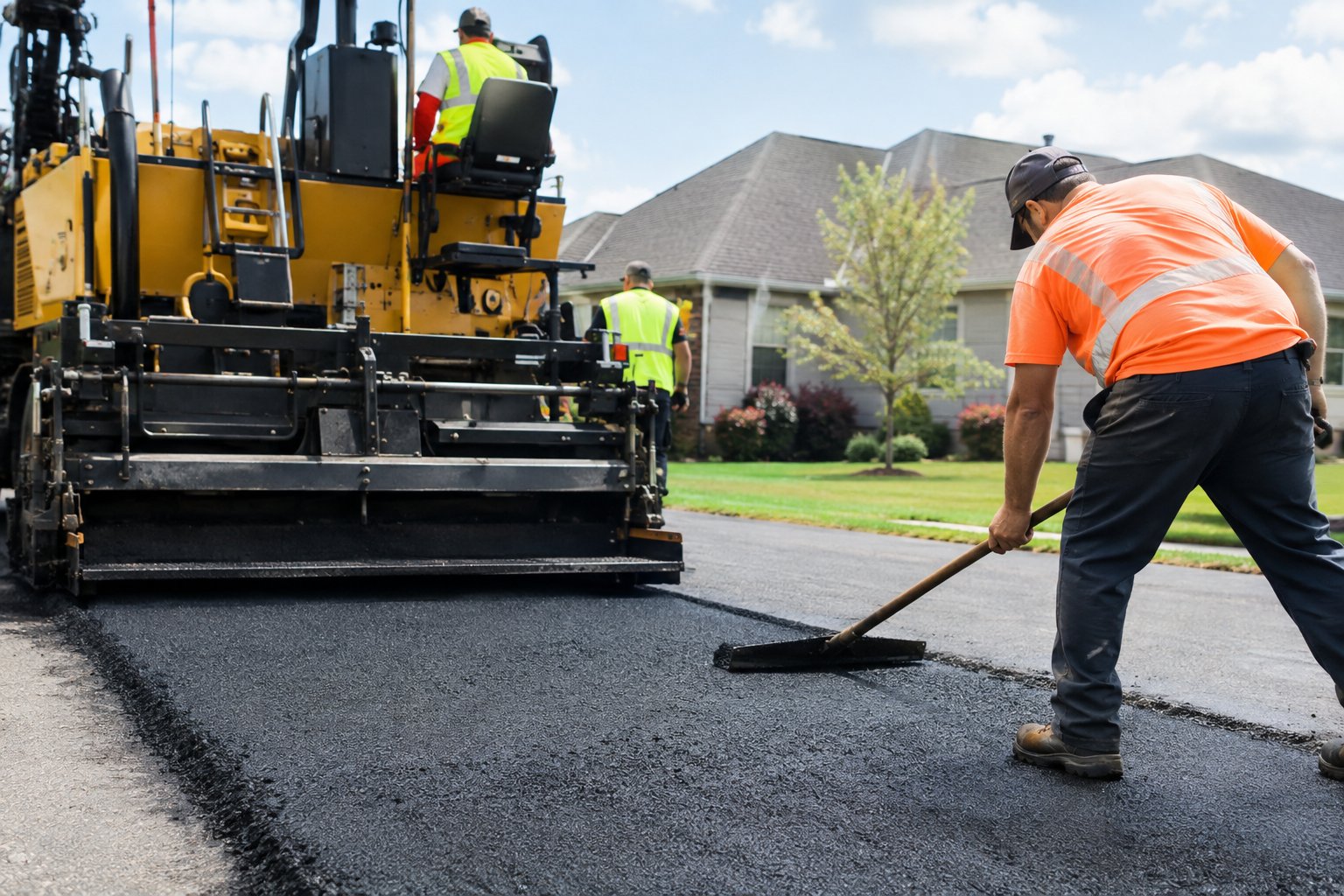
What Determines Asphalt Paving Cost?
The most important thing to understand is that asphalt paving is not priced solely according to square footage. Square footage establishes the amount of surface that needs to be covered, but preparation and construction requirements can significantly affect the final estimate.
SPrices depend on area thickness and access.
A contractor typically considers the following when developing an estimate:
- Total square footage
- Asphalt thickness
- Existing pavement condition
- Base and sub-base condition
- Grading and excavation
- Drainage requirements
- Removal of existing pavement
- Site accessibility
- Labor and equipment
- Material availability
- Traffic requirements
- Project scheduling
Two properties with the same dimensions can therefore have very different asphalt paving cost estimates.
Project Size and Square Footage
The size of the project is one of the most obvious factors affecting cost. A larger area requires more asphalt material, labor, equipment time, and preparation.
However, larger projects can sometimes have a lower cost per square foot because fixed expenses such as mobilization and equipment transportation are spread across more pavement. Smaller projects may have higher per-square-foot costs because those fixed expenses represent a larger percentage of the overall project.
For example, a large commercial parking lot may receive a more favorable unit price than a small driveway even though the total investment is much higher.
When requesting estimates, make sure the contractor clearly identifies the total square footage being paved. This makes it easier to compare proposals and understand exactly what is included.
Asphalt Thickness Makes a Difference
Asphalt thickness is another major factor in determining asphalt paving cost.
The appropriate thickness depends on how the pavement will be used. A residential driveway carrying passenger vehicles generally has different structural requirements from a commercial parking lot that regularly receives delivery trucks.
Heavier traffic requires a stronger pavement structure. Increasing asphalt thickness means purchasing more material and may also require additional preparation beneath the asphalt.
Choosing the correct thickness is important because installing pavement that is too thin for the expected traffic can contribute to cracking, rutting, and premature deterioration. On the other hand, installing more material than the project actually requires can unnecessarily increase the initial budget. Pavement thickness should therefore be selected according to traffic, soil conditions, drainage, and engineering requirements.
Existing Surface Condition
The condition of the existing pavement can have a significant impact on your asphalt paving cost.
If an existing driveway or parking lot has relatively minor surface problems and a stable foundation, resurfacing or an overlay may be possible. If the pavement has extensive structural damage, however, simply placing new asphalt over it may not provide a long-lasting solution.
Common problems that may increase project costs include:
- Deep cracks
- Alligator cracking
- Large potholes
- Soft spots
- Settlement
- Failed base material
- Poor drainage
- Uneven grades
- Severely deteriorated asphalt
A professional assessment can help determine whether your property needs repairs, milling and resurfacing, or complete removal and reconstruction. A recent pavement cost guide notes that overlays, milling, and full-depth replacement can have substantially different planning ranges because the amount of preparation and reconstruction varies.
Site Preparation and Base Work
One of the most important parts of asphalt paving happens before the asphalt is installed.
The pavement needs a stable foundation underneath it. Depending on the property, preparation may include excavation, grading, soil stabilization, aggregate installation, compaction, or replacement of unsuitable material.
If the sub-base is weak, placing new asphalt over it may only hide the problem temporarily. The pavement can eventually crack, sink, or develop other failures as the underlying material moves.
For this reason, a lower quote is not necessarily the better quote. One contractor may include substantial base preparation while another may assume that the existing foundation is suitable.
When reviewing an estimate, ask whether excavation, aggregate base, grading, and compaction are included.
Drainage and Water Management
Water is one of the biggest threats to asphalt pavement. Standing water can weaken the pavement structure, contribute to cracks and potholes, and accelerate deterioration.
A project may therefore require grading adjustments, drainage improvements, catch basins, pipes, or other measures to direct water away from the pavement.
Drainage work can increase the initial asphalt paving cost, but addressing water problems during construction can help protect the pavement investment over time. Commercial paving guidance identifies drainage corrections and site grading as important cost variables because they can require additional construction beyond simply installing asphalt.
Removing Existing Asphalt
If your property already has an asphalt surface, the contractor must determine whether it can be resurfaced or whether it needs to be removed.
Removal may involve milling, excavation, hauling, and disposal. The cost depends on the thickness and condition of the existing pavement as well as how much material needs to be removed.
Milling can sometimes provide an efficient way to remove the upper portion of an existing asphalt surface while preparing it for new pavement. Full removal and replacement is more extensive and generally requires more labor, equipment, and material.
This is why estimates should clearly state whether old pavement removal is included.
Accessibility Can Affect the Price
Site access is another factor that property owners sometimes overlook.
An open parking lot with easy access for asphalt trucks and paving equipment is generally easier to work on than a narrow driveway, congested commercial property, or location with restricted vehicle access.
Limited access can require additional labor, smaller equipment, staged deliveries, traffic control, or changes to the construction schedule.
Occupied commercial properties may also require work to be completed in phases so customers, employees, tenants, or deliveries can continue using portions of the property.
These logistical requirements can influence asphalt paving cost even when the actual paved area is relatively simple.
Labor, Equipment, and Material Costs
An asphalt paving project requires specialized equipment and an experienced crew. Depending on the project, equipment may include asphalt pavers, rollers, milling machines, loaders, excavators, and other construction machinery.
Material prices can also change due to fuel costs, asphalt binder prices, transportation, and local supply conditions. This means an estimate prepared at one point in the year may not remain valid indefinitely.
For larger projects, contractors may also need to coordinate asphalt deliveries carefully so the paving operation can continue efficiently without unnecessary delays.
Comparing Asphalt Paving Estimates
When comparing estimates, avoid choosing a contractor based only on the lowest number.
Instead, review what each proposal actually includes.
A detailed estimate should identify:
- Total paved area
- Asphalt thickness
- Asphalt mix or specification
- Base preparation
- Excavation or milling
- Removal and disposal
- Grading
- Drainage work
- Labor and equipment
- Striping or other finishing work
- Project schedule
- Warranty information
A proposal with a slightly higher price may provide significantly more preparation and better materials. Comparing the scope of work allows you to determine whether contractors are actually offering equivalent services.
Choosing a Naples Paving Contractor
For property owners in Southwest Florida, working with an experienced naples paving company can make the planning process easier.
A qualified local contractor should be familiar with regional soil conditions, drainage concerns, traffic requirements, and local construction considerations. They should also be willing to inspect the property before providing a detailed estimate.
Rather than relying on a generic price per square foot, ask for a site-specific assessment. The contractor can evaluate the current pavement, foundation, drainage, access, and intended use before recommending the appropriate paving solution.
A reputable naples paving company should also explain why a particular pavement thickness or preparation method is being recommended. Clear communication helps property owners understand where their money is going and reduces the possibility of unexpected charges during construction.
Ways to Manage Your Asphalt Paving Budget
There are several practical ways to control your asphalt paving cost without sacrificing necessary construction quality.
First, maintain existing pavement before problems become structural. Crack filling, sealcoating, and timely repairs can help extend pavement life.
Second, address drainage problems early. Water-related failures can become more expensive when they are ignored.
Third, compare multiple detailed proposals. Make sure each contractor is pricing the same scope of work.
Fourth, avoid reducing asphalt thickness simply to lower the initial price. The pavement must be designed for its intended use.
Finally, plan the project carefully. Good scheduling can help reduce disruptions, coordinate access, and prevent unnecessary delays.
Is Asphalt Paving a Good Investment?
Asphalt can provide a practical and durable surface for driveways, parking areas, access roads, and other properties when it is properly designed and installed.
The key is to look beyond the initial price. A quality pavement system includes the appropriate foundation, drainage, asphalt thickness, compaction, and installation practices.
A low initial asphalt paving cost may not represent good value if the pavement requires major repairs soon after installation. Conversely, a properly prepared project can provide better long-term performance and reduce the frequency of expensive repairs.
The best approach is to evaluate both initial investment and expected service life.
Final Thoughts
Understanding asphalt paving cost gives property owners a better starting point when planning a paving project. Area, thickness, existing pavement condition, base preparation, drainage, accessibility, labor, materials, and project requirements all contribute to the final price.
Instead of relying on a generic cost-per-square-foot number, request a detailed assessment and written proposal. This allows you to understand exactly what work is required and compare contractors based on value rather than price alone.
For property owners considering a project in the Naples area, an experienced naples paving company can evaluate the property and recommend a paving approach suited to its specific conditions and intended use.
The goal should not simply be to find the lowest asphalt paving cost. The goal is to achieve a properly constructed pavement surface that provides dependable performance and good long-term value.
Frequently Asked Questions
What is included in asphalt paving cost?
The total cost may include asphalt materials, labor, equipment, site preparation, grading, base work, milling or removal, and other project-specific services. Drainage, striping, curbs, and other improvements may be priced separately.
Does asphalt thickness affect the price?
Yes. Thicker asphalt requires more material and may require additional preparation. The appropriate thickness should be based on traffic, soil conditions, drainage, and intended use.
Is resurfacing cheaper than completely replacing asphalt?
Generally, resurfacing can cost less than full removal and replacement when the existing pavement and underlying base are structurally sound. If the foundation has failed, however, full-depth reconstruction may be more appropriate.
How does drainage affect asphalt paving cost?
Drainage improvements can increase the initial project price, but proper water management can help prevent premature pavement deterioration and reduce future repair requirements.
Does project size affect the price per square foot?
Yes. Larger projects can sometimes benefit from economies of scale because mobilization, equipment, and other fixed expenses are distributed across a larger area.
Should I get more than one paving estimate?
Yes. Comparing multiple detailed estimates can help you understand local pricing and determine whether each contractor is including the same scope of work.
How can I reduce asphalt paving cost?
Regular maintenance, early repairs, proper drainage, accurate project planning, and comparing detailed estimates can help control costs. Avoid cutting necessary foundation or thickness requirements simply to reduce the initial price.
Why should I hire a local Naples paving company?
A local contractor may have experience with area-specific conditions, access challenges, drainage requirements, and common paving applications. A site inspection also allows the contractor to develop a more accurate project-specific estimate.