
Understanding How Automotive Paint Colors Work
Modern vehicle paint is made up of multiple layers. The base coat provides the color, while the clear coat adds gloss, depth, and protection. The base coat itself may contain solid pigments, metallic flakes, or pearlescent materials that reflect light in different ways. This complexity is what gives modern vehicles their rich appearance, but it is also what makes color matching more demanding.
Manufacturers often use the same color name across different years, yet the formula may change slightly. In addition, environmental exposure such as sunlight, road debris, and weather conditions can cause the original paint on your car to fade over time. Because of this, matching paint is not just about finding the right color name. It is about matching the actual appearance of the paint as it looks on your vehicle today.
Locating Your Vehicle’s Paint Color Code
The first step in matching paint accurately is identifying the factory color code. Most vehicles have a paint code sticker or plate located in common areas such as the driver’s side door jamb, under the hood, in the trunk, or inside the glove box. This code is a combination of letters and numbers that identifies the original paint formula used by the manufacturer.
Once you have the code, you can provide it to a paint supplier or use it to look up the recommended formula. While the color code is an essential starting point, it should not be the final step. Variations in production batches and aging mean that further adjustment is often necessary for a perfect match.
Why Visual Matching Alone Is Not Enough
Many people attempt to match paint simply by comparing color chips or looking at photos online. While this may work for older solid colors, it is rarely accurate for modern finishes, especially metallics and pearls. Lighting conditions, viewing angles, and surface texture all influence how color appears.
Professional shops rely on more advanced methods because the human eye can be easily deceived. What looks like a close match indoors may appear noticeably different in direct sunlight. For this reason, combining visual comparison with technical tools produces the best outcome.
Using Technology for Accurate Color Matching
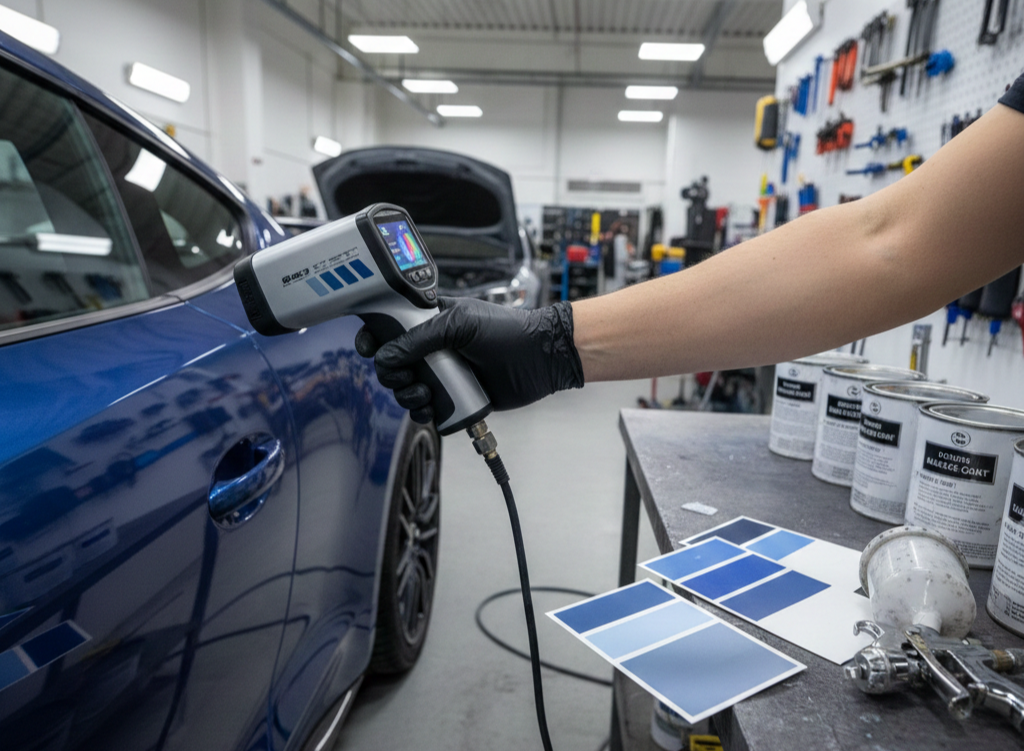
Modern paint suppliers and body shops often use spectrophotometers to analyze a vehicle’s existing paint. This handheld device scans the surface and measures how light reflects from the color. The data is then used to generate a custom formula that closely matches the paint on your car, accounting for fading and subtle variations.
This technology is especially valuable when working on older vehicles or colors that are no longer produced exactly as they were when new. By using a scan instead of relying solely on the factory code, you can achieve a much closer match.
Selecting the Right Automotive Base Coat Paint
Choosing high quality materials is just as important as matching the color. Not all base coats are created equal, and lower quality products may spray unevenly, fade faster, or fail to blend properly. When selecting automotive base coat paint, look for reputable brands known for consistency and durability.
Using automotive base coat paint can significantly enhance the final appearance and durability of your vehicle’s paint job. It’s crucial to choose high-quality materials and follow proper application techniques for the best results.
High quality base coats provide better pigment distribution, improved coverage, and more predictable results during blending. They also work more effectively with clear coats, resulting in a longer lasting finish that resists UV damage and environmental wear.
Preparing the Surface for a True Color Match
Even the best paint will not look right if the surface preparation is poor. Proper preparation ensures that the base coat lays evenly and reflects light consistently. Begin by thoroughly cleaning the area to remove dirt, grease, and contaminants. Sand the surface to create a smooth and uniform texture, then apply a suitable primer if bare metal or filler is exposed.
The color of the primer can also influence the final appearance of the base coat. Many professionals use tinted primers to help the base coat achieve full coverage more efficiently and maintain accurate color depth.
Mixing and Testing Before Application
Before spraying the vehicle, always mix the paint according to the manufacturer’s instructions and test it on a spray out card or test panel. Apply the base coat and clear coat to the test panel and allow it to dry fully. Then compare it to the vehicle under different lighting conditions, including sunlight and shade.
If the color appears slightly off, adjustments can be made to the formula before committing to the vehicle. This step may seem time consuming, but it is one of the most effective ways to avoid costly mistakes.
Application Techniques That Affect Color Match
How the paint is applied can significantly affect how the color looks. Spray gun settings, distance from the surface, overlap pattern, and air pressure all play a role. Inconsistent application can cause the color to appear darker or lighter in certain areas.
Blending is a common technique used to make repairs less noticeable. Instead of painting only the damaged area, the new base coat is gradually blended into the surrounding original paint. This soft transition helps disguise minor color differences and creates a more natural appearance.
The Role of Clear Coat in Color Perception
Clear coat does more than add shine. It also affects how the base coat color is perceived. Different clear coats can enhance depth, gloss, or warmth, subtly altering the final look. Applying clear coat evenly and at the recommended thickness is essential for maintaining consistent color across panels.
After curing, polishing and buffing the clear coat can further refine the finish and help the repaired area match the surrounding paint even more closely.
Long Term Care to Maintain Color Consistency
Once your paint match is complete, proper care helps preserve the color and finish. Regular washing, waxing, and protecting the vehicle from prolonged sun exposure can reduce fading. Using quality car care products ensures that both the original paint and the newly applied base coat age at a similar rate, maintaining a uniform appearance over time.
Frequently Asked Questions
Why does my paint still look different even with the correct color code?
Factory color codes provide a starting point, but paint can fade or change over time. Environmental exposure and manufacturing variations mean additional adjustment or scanning is often needed for a perfect match.
Can I match automotive paint without professional equipment?
It is possible, especially for small repairs, but professional tools like spectrophotometers greatly improve accuracy, particularly with metallic and pearlescent colors.
How many layers of base coat should I apply?
Most base coats require two to three thin, even coats. Always follow the manufacturer’s recommendations for best coverage and color consistency.
Does clear coat affect the final color?
Yes. Clear coat influences gloss and depth, which can change how the color appears. Proper application is essential for an accurate match.
Is blending always necessary?
Blending is highly recommended for spot repairs, as it helps hide minor color differences and creates a smoother transition between old and new paint.